

 Tweet
Tweet
-
-

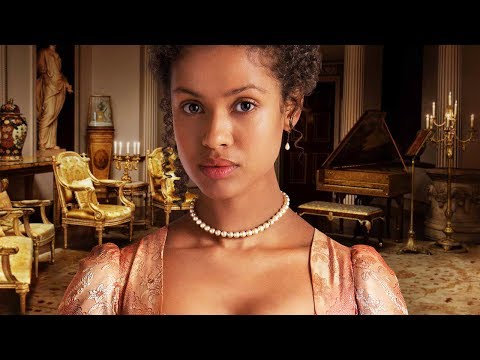
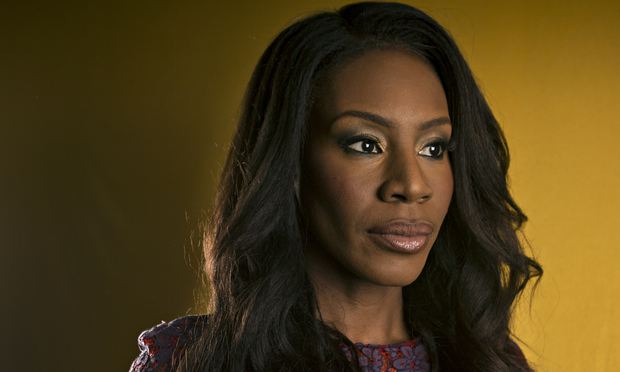
Amma Asante sits at the corner table of a London roof-garden cafe on a bright morning – British-born of Ghanaian parents, she finds herself, as one of our most promising film directors, at a turning point in her career. It is a strange moment for her because, by some serendipitous twist, her first major feature film, Belle (her indie debut, A Way of Life, won her a Bafta in 2005), is about slavery and follows on the heels of Steve McQueen's Oscar-winning 12 Years a Slave. An impossible act to follow, you might suppose. Yet the two films could hardly be more different."I wouldn't want audiences to come to Belle and think they were about to see '12 Years a Slave Mark 2'," Asante says. Based in Britain and rooted in fact, Belle is an extraordinary story, she tells me: Dido Elizabeth Belle (1761-1804) was the daughter of John Lindsay, a British admiral, and an African slave. She grew up in Kenwood House, Hampstead, under the guardianship of Lord Chief Justice Mansfield – her father was Mansfield's nephew and, contrary to what you would expect of the period, she was raised almost as an equal to his other great niece, Lady Elizabeth Murray. The film – with Tom Wilkinson as Mansfield, Penelope Wilton as Lady Mary Murray and the bewitchingly beautiful Gugu Mbatha-Raw as Belle – pursues the possibility that she influenced her guardian into legal rulings that would eventually lead to the abolition of slavery. It has just opened in the US to a chorus of approval and with the unexpected distinction of beating the new Spider-man at the box office on its opening weekend in most of the cinemas in which it was screened (not to mention encouraging Oprah to tweet about it). But Asante is not a woman to swank and appears to have no sense of what seems certain from where I'm sitting: she is fated to be feted.
When she first heard rumours of McQueen's "slave movie", she was already filming her own. "I didn't know anything about the film itself. When you are making a movie, your head is completely buried." But she remembers being horrified by the demeaning phrase "slave movie" – as if it were now a genre. She had no idea the rival film was the story of Solomon Northup, who started out as a free man. But one should not be surprised at the collision: slavery does not go away as a subject – as today's abducted Nigerian schoolgirls threatened with being sold as sex slaves horribly demonstrates. In art, too, it crops up where you least expect it – take the National Portrait Gallery, where you can see (until July) the earliest British portrait of a freed slave, Ayuba Suleiman Diallo, accompanied by a poem by Ben Okri to dramatise his enigmatic history.
It would be grotesque were the power of 12 Years a Slave to eclipse the beauty of Belle. McQueen's film is a brilliant, raw, punishing tour de force. Belle is a costume drama "in the spirit of Jane Austen, it describes a genteel world that existed while the parallel world of slavery was going on". The film has a golden quality – without being sentimental or false. And it does what McQueen's film did not. It reminds us that the history of slavery belongs to Britain as well as to the US. In the 18th century, the British empire's economy depended on the slave trade. In Georgian Britain, there were about 15,000 black people – mainly in London – and less than a third of that population was free. -

Lady Elizabeth Murray and Dido Belle, attributed to Johann Zoffany, 1779:
'I looked at that portrait and thought: oh my God, look how Elizabeth loves her!'
Photograph: Courtesy of the Earl of Mansfield/Scone Palace
But before we pursue this further, I want to clear up a puzzle about the film's evolution. The screenplay is credited to Misan Sagay, the Anglo-Nigerian writer who started the project and who, after years of trying to launch it – with HBO initially – had to abandon it because of ill health. The film's authorship has been a contested issue but Sagay has been ruled, by the Writers Guild of America, West, as its author. Asante's involvement began at the point where Sagay left off, which meant that when producer Damian Jones sent her a postcard of the painting that inspired Sagay and that used to hang in Kenwood, attributed to Johann Zoffany (circa 1778), she was free to "derive from it whatever I wanted". She has invested a huge amount of energy into making the script work for her directorial concept of the film. It took four years to get made and Asante was, she has said, still doing rewrites on her wedding day.
"Everything you will have taken thematically from the film is what the portrait said to me the first time I saw it," she explains. In Zoffany's painting, Dido and Elizabeth are side by side in a country park. Elizabeth, in a lustrous pink frock, is given subtly preferential treatment: her pale complexion catches the light. Dido looks as if she is about to leave, an acknowledgement, perhaps, that it is unusual she should be in the frame at all. She holds a basket of fruit at a dangerous tilt. Her right index finger pensively stabs her cheek. Her playful expression is of a piece with the jaunty feather that tops her turban. Elizabeth detains her with a smile and a hand on one elbow. If not a picture of perfect equality, it is the friendliest of starts. "I looked at that portrait and thought: oh my God – look how Elizabeth loves her! I have never seen a person of colour in a painting from this period not being treated as a pet." And to prove the point, Asante includes in her film several late-18th-century paintings: black figures boosting white subjects, looking deferentially upwards from the corners of canvases.
What did Belle's face say to Asante? "It said: I am here. I'm relevant. I'm a lady. I'm brown. I'm made up of many things. I'm happy with who I am." What emerges in the film is that Lord Mansfield was happy with who she was too – their mutual affection a matter of historical record. According to a forthcoming book by Paula Byrne, before his death, Lord Mansfield left Belle a portrait of himself (slightly vainly perhaps) to remind her of "one she knew from her infancy, and always honoured with uninterrupted confidence and friendship". He also put in writing, lest there be any doubt after his death: "I confirm to Dido Elizabeth Belle her freedom." He was taking no chances.
Comment
-
More: http://www.theguardian.com/film/2014...or-grange-hillIt was in 1772 that Lord Mansfield first ruled that "chattel slavery was not supported by law". But the film focuses on the later and more dramatic Zong case, which he also oversaw. In 1781, the Zong, a congested slave ship, left Africa for Jamaica and after an epidemic on board, a third of the slaves – 142 men – were thrown into the sea. The captain's intention was to claim insurance money on their lives (at £30 each) and to insist their deaths were inevitable (they would pretend the water had run out). When it was discovered there was no water shortage – it had rained heavily – the insurers refused to pay up and the case came to court.
The point in the film where Lord Mansfield makes his ruling is thrilling and moving because, for him and his ward, this judgment was also personal. Asante was fascinated by the tension between "instinct and conditioning" in the characters. She is "obsessed" with Lord Mansfield, seeing him as a reluctant radical.Comment
-
Taking a few liberties with the real story of 'Belle'The truth is often slippery in a movie inspired by history, especially when there's not that much in the written record to begin with. In Belle, the filmmakers say the overall truth remains but they took a few liberties with the details. Examples:
Her name: It wasn't Belle, it was Dido Elizabeth Belle: Dido for the Queen of Carthage. Elizabeth for her great-uncle's wife, who helped raise her. And Belle for her mother, Maria Belle, whose name was likely taken from that of the owner of the plantation where she was enslaved. But Belle worked as shorthand for the title and for its allusion to Dido's beauty.Her mother: In the movie, Dido's mother is dead but in reality she wasn't. Contemporary descendants believe new research suggests that Maria Belle was set up by Dido's father in a house with land in Pensacola, Fla., in the 1770s.Her husband: She did marry a man named John Davinier but he was not a lawyer, he was a valet. The filmmakers chose to make him a lawyer to serve as a foil to Lord Mansfield in the legal case he was considering. But it's not clear whether, as in the movie, Davinier was an ardent abolitionist.
The legal case: In the movie, Lord Mansfield is considering the Zong massacre case (can owners of a slave ship who threw 140 slaves overboard collect insurance for their loss of "property"?) but in the scene where he issues his ruling he reads from his ruling in an earlier, similar case that also helped pave the way to the end of slavery. The filmmakers conflated the two cases to provide a full picture of Mansfield as a judge who came to see slavery as morally wrong.
The painting: It is unsigned but long thought to have been painted in 1779 by renowned portraitist Johann Zoffany. But the latest research suggests not. Instead, it was probably painted by a Scot named David Martin who painted a famous portrait of Lord Mansfield.
The heiress: In the movie, Dido has the advantage over her white cousin, Lady Elizabeth Murray, in the marriage market because she has an inheritance. In reality Lady Elizabeth had an inheritance too.
The clinch: Couples, no matter how much in love, would not in 18th-century Londonkiss in passionate embrace in the street. But even movies inspired by history need a love story.Comment

Comment