

 Tweet
Tweet
http://youtu.be/GVCzqtgdjUA Johnny Osbourne Murderer
-
-
Thanks. Bumpy sounds incredible on this track. I have always liked it.

I tracked it down. I always thought this was the original. I'm discovering a lot...thanks.

"Lots of people keep on skanking while the prophecy fulfillingEntertainment is a form of enjoyment
No bother fight inna de dance
We come fe enjoy weself
While the music playing
And me idren skanking
Me sistren dancin
If me see a man, a dance with me woman
Me nah go get jealous
Me nah go make no fuss … "
Entertainment, the 1981 Triston Palma song on the 'Heavenless' rhythm about not breaking the dancehall peace, was written specifically to calm dancehall tension in the rub-a-dub era, where the music encouraged close contact which often caused jealousy.
Recorded by Triston Palma (commonly called 'Palmer' as his surname has been misspelt by producers), the lyrics for Entertainment were written by deejay Jah Thomas and the song released on his MidnightRock label.
Palma had done popular songs before, including A Class Girl (covered by Big Mountain) and Spliff Tail (tossed out by the music charts jury for its marijuana content, but reinstated by dint of sheer popularity). Unknown to him, those songs were having an effect in another time zone that would result in an early morning wake-up call - and Entertainment.
wanted to record him
Palma says TADS Records' Ted Dawkins heard his songs in New York and asked Jah Thomas, who was also in the Big Apple, if he knew a singer named Triston Palma as he wanted a recording from him. So Jah Thomas came calling early one Monday morning. The two knew each other by sight, but had not had much interaction.
"Him wake me up and say singer, 'me have a song a go mash up the place'. Him have some tape and say if me available to sing the song same time," Palma said.
They went to King Tubby's Waterhouse studio, where Jah Thomas told him the lyrics. "From thereso me take it on and it turns out to be one of my biggest seller," Palma said.
It was the beginning of fruitful teamwork in a productive period for Palma.Joker Smoker was also done for Jah Thomas and What a Bubbling forOssie Thomas, who also produced I'm Ready.
The ghetto love song Take My Hand was done for Barry Clarke.
Jah Thomas had the concept of writing a dancehall peace song in mind for some time before the actual incident which crystallised the lyrics in his mind.
"Me is a man go dance for years," Thomas said. With the rub-a-dub music and accompanying hip grinding dance in vogue, there was a lot of jealousy from both men and women as their partners danced with other persons. That led to fights which sent people scattering.
need an anthem
Thomas said at the time "we need a anthem fe say no fight inna de dance". Then, in New York, he went to a dance with Ted 'TADS' Dawkins, who remarked that it was the kind of event at which a "man tun on him gun". This reinforced Thomas' determination to write a dancehall peace song.
When he was back in Jamaica, Jah Thomas went to a Saturday night dance with King Jammy's sound system on Solitaire Road, promoted by Beardy the Sherriff. When he got there before midnight, the dance was already over - there had been a confrontation between police officers and 'rude boy'.
The Sunday morning, Jah Thomas came up with the first line "entertainment means enjoyment". But his girlfriend adjusted it, saying "entertainment is a form of enjoyment". "Me say a dat me want," Thomas recalled. "From she say that, me no need nutten more. Me did have the picture already."
In New York, Dawkins had already, insisted that he record Palma and Thomas duly went calling that Monday morning.
The cut of the 'Heavenless' rhythm, composed by Don Drummond for Studio One, was done by Roots Radics band at Channel One, with Dean Fraser, Nambo Robinson, Junior 'Chico' Chin and David Madden playing the horn line. "A orchestra me go fa," Thomas said. There was a power cut when the vocals were to be recorded at Tubby's and "to get Tubby turn on him Delco you did have to pay extra". It was mixed at Channel One, with Barnabas as the engineer.
Entertainment was first played on Virgo sound system at Skateland, Half-Way Tree, in a session with Jammy's and Black Scorpio, and was a hit. Palma says he first performed the song at the Scouts Headquarters on Camp Road. From the studio reaction to the dance response and live performance feedback, Entertainment was quickly a hit and remains a dancehall standout nearly 30 years after it was recordedLast edited by Tropicana; 10-03-2013, 12:24 PM.Comment
-
dis is another of his classics...dis one was, is a stalwart fi bands a yaad.... Eastern Standard Time http://youtu.be/KBB3KnLWZXsComment
-
Why is there no footage of Don Drummond performing?
Yup I've heard this one too....the music of Don Drummond is pure....golden ....magic. What a talent. It is too bad that his personal demons got the better of him. So sad.
 Last edited by Tropicana; 10-03-2013, 12:01 PM.
Comment
-
This is new to me.
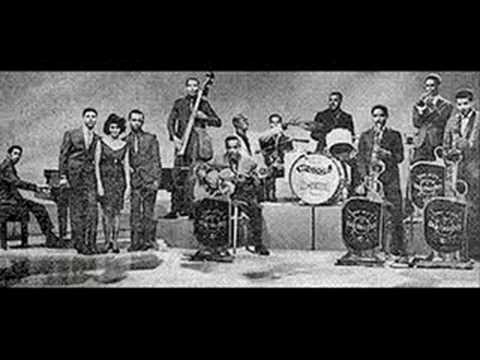
 I know what to get my aunt for Christmas.
Comment
-
The Wailers were backed by the Skattalites at one time? Am I the only one who didn't know this?

"Simmer Down" was the first single released by The Wailers, accompanied by the ska supergroup, The Skatalites, and produced by Clement "Coxsone" Dodd in 1963. It was the number one hit in Jamaica in February, 1964.The song was directed to the "Rude Boys" of the ghettos of Jamaica at the time, sending them a message to cool down or "Simmer Down" with all the violence and crime going on in Kingston. The subject matter of "Simmer Down" made The Wailers stand out amongst their contemporaries. The Wailers at this time contained Bob Marley, Bunny Wailer, Peter Tosh, Junior Braithwaite, Cherry Smith and Beverley Kelso. It was Bob Marley's first hit and his career as a song writer and performer took off from there.
Although "Simmer Down" was a hit, Peter Tosh, one of the three original Wailers, has said in an interview that he hated it.[1]Last edited by Tropicana; 10-03-2013, 08:29 PM.Comment
-
Is this skatalites too? On youtube this is on the Skatalites channel.
You know how often I listen to this.....
Mi mussee have on blonde wig fi true.
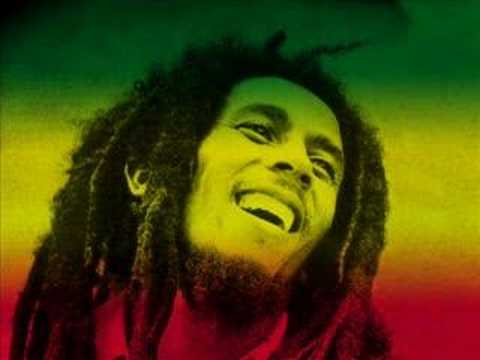 Last edited by Tropicana; 10-03-2013, 12:13 PM.
Comment
-
This is the version I know best.
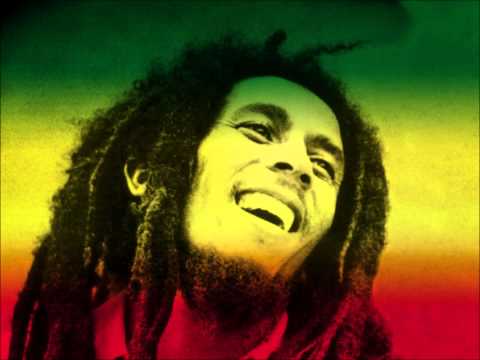
Comment
-
Pure genius.....

Unreleased Killer Straight From The Yard,Uptempo Cut To ''Cool Shade'' One Of Don's Very Last Recording.Comment
-
Just stumbled across this. Listening to it.

Comment
-

Comment
-
These were referred to in the interview.

This one was done after the second time he was released form Bellevue.

Trying to find the Reincarnation of Marcus Garvey.Last edited by Tropicana; 10-03-2013, 02:04 PM.Comment
-

Comment
-
Perhaps one of the best-known Alpha graduate was the world-rated trombonist, Don Drummond, who attended the institution between 1943 and 1950.The month of May will always be remembered by ardent music fans and historians as the one in which Drummond passed away. It was exactly 44 years ago, this past Monday, that this illustrious Jamaican met his demise under controversial circumstances: It was believed, but never confirmed, that the mentally challenged trombonist was beaten to death while an inmate at the Bellevue Hospital in east Kingston.
Drummond's musical journey began when he entered the Alpha Boys' School on December 10, 1943.
born in 1934
Principal, Sister Mary Ignatius Davis, with whom I had an interview shortly before her death on February 9, 2003, confirmed, while providing supporting documents, that Drummond was nine years old on admission, which by simple mathematics would place his birth in 1934 and contradicts many other theories.
History has it that Drummond was taken there by his mother, who could no longer control his truancy. Two years later he was placed in the music band, and taught the most awkward of instruments - the trombone.
No instrument was quite like it, given its push and pull manoeuvres, and its queer seven-position note scale. Yet Drummond was able to master the instrument in almost 'no time', reinforcing the theory that 'there is a very thin line between a genius and a mad man'.
He soon began entertaining his peers and teachers with his crisp, sharp, multiple short notes that many found difficult to pattern.
Creating some of the best musical arrangements in Jamaica's popular music, like Eastern Standard Time, Music Is My Occupation and others which are still being imitated today, Drummond was critical to the emergence and development of Jamaica's popular music.
While at Alpha, Drummond was described by Sister Ignatius as a very quiet, introspective boy, who worked hard, seldom smiled, and spoke little, idiosyncrasies which followed him through life, and was perhaps symptomatic of his later demise.
Upon his graduation from Alpha, Drummond was recommended to, and accepted by the famous Eric Deans All Stars band as trombonist. It was the beginning of a brand new world for the teenager, whose earliest efforts were mainly jazz-oriented recordings, foremost among which was a piece titled The Answer.
By the mid-1950s, Drummond had established himself as the island's top trombonist, while some musicologists placed him among the top three in the world.
Drummond also had stints with The Sonny Bradshaw and Kenny Williams orchestras. His main influences then were the American big band sound and the 'jitterbug boogie', which shaped his next set of recordings, demonstrated by Schooling The Duke, Reload and Looking Through The Window.
r&b influence
During the mid to late 1950s, the influence of rhythm and blues and the sound system began to be felt in Jamaica. The music of the day was evolving into something new, and the American boogie, which had caught on in Jamaica, was making a transition into ska.
Drummond became part of this musical craze when he joined the likes of Tommy McCook, Roland Alphonso, Johnny Moore, Jackie Mittoo, Lloyd Knibbs and others to form the Skatalites band in 1963.
It was a period of enormous musical enjoyment as the band, with Drummond as the star act, recorded some memorable pieces like The Guns Of Navarone, Man In The Street, Reload, Scrap Iron, Bridge View, President Kennedy, and Addis Ababa.
He even had an appropriate piece titled This Man Is Back, signalling his return to recording, after one of his mental lapses.
And who could ever forget those exhilarating trombone solos that popularised Justin Hines' Carry Go Bring Come, Dotty and Bonny's Dearest and others.
Drummond did the bulk of his recordings for producers Clement 'Sir Coxson' Dodd and Arthur Reid, but also had some popular cuts for Randys and Leslie Kong, for whom he did the very mournful Snowboy and Vat7. He also graced producer Justin Yap with his presence, on the top-10 hit Confucius.
Backed by the Skatalites band, Drummond recorded close to 200 selections, while writing or improvising on a vast amount. In addition, he had some memorable performances at clubs like The Bournemouth in Rockfort, The Glass Bucket in Half-Way Tree, The Silver Slipper in CrossRoads, and several theatres across the island.
Drummond, in fact, had a long history of mental illness, and was hospitalised on a number of occasions. His condition worsened shortly after his last set of recordings with the Skatalites in 1964, and on New Year's Day 1965, in a fit of jealous rage, he stabbed to death his girlfriend, Anita Mahfood, a rhumba dancer who performed under the name Marguerita, and then turned himself in to the police.
Legally represented by former Prime Minister Percival James Patterson, who was once manager of the band, he was tried, declared a criminal lunatic, and committed to the Bellevue Asylum Hospital, where he died under mysterious circumstances on May 6, 1969.
Widely accepted as a musical genius, Drummond has left us more than a hundred improvised and original compositions, which will not only continue to entertain us, but have become pieces for study by present and future generations of musicians.Last edited by Tropicana; 10-04-2013, 09:59 PM.Comment
-
This was probably among the last songs he recorded.
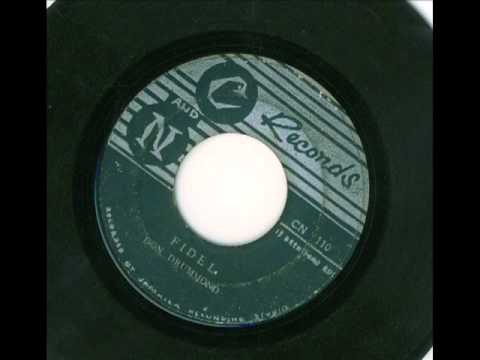
Comment


Comment