

 Tweet
Tweet
I guess my thread is timely.
Brand New Book: DON DRUMMOND: GENIUS & TRAGEDY
You can preview and read some of the book here books.google.com/books?isbn=0786475471

Brand New Book: DON DRUMMOND: GENIUS & TRAGEDY
You can preview and read some of the book here books.google.com/books?isbn=0786475471
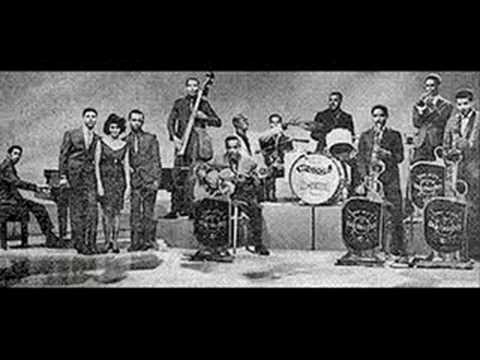
Don Drummond’s musical life began at the Alpha Boys School – the crucible that gave the world musicians like Lennie Hibbert, Tommy McCook, Rico Rodrigues, Cedric ‘Im’ Brooks and Joe Harriott amongst others. While Drummond had friends he was never the most communicative person. It was always about the music and eventually he was recruited to Eric Deans Orchestra who were resident six nights a week at the Colony Club in Kingston playing Count Basie, Duke Ellington and Benny Goodman hits for “society” people and tourists.
Agustyn paints a vivid picture of their working life as musicians in the mid Fifties up to Independence in ’62 when the rise of Sound Systems created a direct momentum for original Jamaican music that could be played into the dances.
Drummond was famed for being strange and difficult. In fact, he had spent stints in Bellvue Mental Hospital and was suffering from mental illness. Sound man Clement ‘Coxsone’ Dodd knew of Don’s condition and as he needed Drummond on his Studio One records bought him a new trombone as a way of owning him.
Recording business in Jamaica is serious business and at Studio One they had to clock on and clock off. It was a tuff life with small returns and Drummond suffered under the pressure.
Central to Drummond’s story that Anita Mahfood aka “Margarita – The Rhumba Dancer” and with her story comes an insidious undercurrent of violence. While fleeing a dark and abusive relationship with boxer Rudolph ent- the Dark Destroyer – Anita encountered Don Drummond and his music. It ignited a spark that was to burn so fiercely that it eventually destroyed them both.
[ATTACH=CONFIG]1591[/ATTACH]
While the members of the Skatalites cut hundreds of tunes for various producers the creative playing was often left for Count Ossie’s grounations at the Rastafari camp at Wareika Hill. According to producer Clive Chin his father (Randy’s ) insisted he stay in the car when he visited the camp. It was at Wareika that they gathered to reason, chant down Babylon, burn the chalice and play into the night with the drummers. Anita Mahfood was a regular at Wareika and her one and only record ‘Ungu Malungu Man’ which was retitled ‘Woman A Come’ by Duke Reid was her paean to Don Drummond another camp regular.
<strong>

In late 1964 Drummond and Anita Mahfood were living together. Their relationship was turbulent. On New Year’s Eve Anita ignored Drummond’s demands that she stop dancing and went to dance at the Baby Grand and Club Havana. It proved a fatal decision. Don’s psychosis fuelled jealousy tragically led to his murdering Anita upon her return. The bright light which fueled these two spectacularly creative beings was snuffed out that night. Don Drummond went on to be found “Guilty but insane” and was confined to Bellvue Mental Hospital. Confirming that the conditions in the hospital were degrading and disgraceful – and possibly violent on the part of the staff – he died prematurely from “congestive cardiac failure and anemia” at the age of 36.
Heather Augustyn paints a vivid picture of a hugely creative era in Jamaica and never shrinks from dealing with a cycle of violent abuse and the stigma of mental illness. In the end ‘Don Drummond: The Genius and Tragedy of the World’s Greatest Trombonist’ leaves us no place to go but the music and that my friends takes us to those Far East melodies, those groundbreaking compositions… minor masterpieces… that allow his melancholy genius to shine. Roll on Don Cosmic… Ungu Malungu Man….
Drummond was famed for being strange and difficult. In fact, he had spent stints in Bellvue Mental Hospital and was suffering from mental illness. Sound man Clement ‘Coxsone’ Dodd knew of Don’s condition and as he needed Drummond on his Studio One records bought him a new trombone as a way of owning him.
Recording business in Jamaica is serious business and at Studio One they had to clock on and clock off. It was a tuff life with small returns and Drummond suffered under the pressure.
Central to Drummond’s story that Anita Mahfood aka “Margarita – The Rhumba Dancer” and with her story comes an insidious undercurrent of violence. While fleeing a dark and abusive relationship with boxer Rudolph ent- the Dark Destroyer – Anita encountered Don Drummond and his music. It ignited a spark that was to burn so fiercely that it eventually destroyed them both.
[ATTACH=CONFIG]1591[/ATTACH]
While the members of the Skatalites cut hundreds of tunes for various producers the creative playing was often left for Count Ossie’s grounations at the Rastafari camp at Wareika Hill. According to producer Clive Chin his father (Randy’s ) insisted he stay in the car when he visited the camp. It was at Wareika that they gathered to reason, chant down Babylon, burn the chalice and play into the night with the drummers. Anita Mahfood was a regular at Wareika and her one and only record ‘Ungu Malungu Man’ which was retitled ‘Woman A Come’ by Duke Reid was her paean to Don Drummond another camp regular.
<strong>
In late 1964 Drummond and Anita Mahfood were living together. Their relationship was turbulent. On New Year’s Eve Anita ignored Drummond’s demands that she stop dancing and went to dance at the Baby Grand and Club Havana. It proved a fatal decision. Don’s psychosis fuelled jealousy tragically led to his murdering Anita upon her return. The bright light which fueled these two spectacularly creative beings was snuffed out that night. Don Drummond went on to be found “Guilty but insane” and was confined to Bellvue Mental Hospital. Confirming that the conditions in the hospital were degrading and disgraceful – and possibly violent on the part of the staff – he died prematurely from “congestive cardiac failure and anemia” at the age of 36.
Heather Augustyn paints a vivid picture of a hugely creative era in Jamaica and never shrinks from dealing with a cycle of violent abuse and the stigma of mental illness. In the end ‘Don Drummond: The Genius and Tragedy of the World’s Greatest Trombonist’ leaves us no place to go but the music and that my friends takes us to those Far East melodies, those groundbreaking compositions… minor masterpieces… that allow his melancholy genius to shine. Roll on Don Cosmic… Ungu Malungu Man….




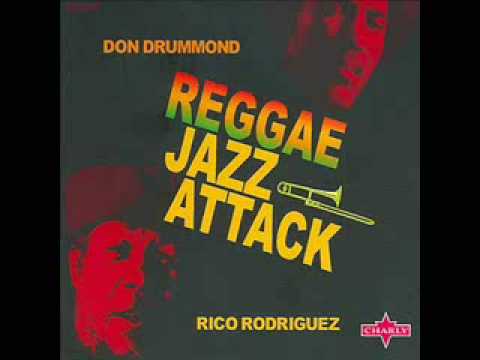

 Don Drummond, aka Don Cosmic, was born in 1943, Kingston, Jamaica. To state anything more than that, would be a travesty. Apart from the fact that like all legends, nothing seems to known about his early days, men like Don D are just here for a short while, then gone…
 Drummond had just completed one of his many short visits to one of the local mental hospitals, and didn’t even own a trombone, but Coxone was impressed enough to take Drummond on him as a solo artist and session player. In the meantime, the specials Drummond had previously cut were starting to be released commercially in Jamaica and England to critical acclaim. Drummond started his recording career sometime around 1956, with his first record being"On the Beach", with Owen Grey on vocals.

 Tommy McCook on tenor saxes, Lester Sterling on alto sax, Leonard Dillon on trumpet, Lloyd Brevette on bass, Jah Jerry on guitar, Ernest Ranglin on guitar, Rico Rodriguez on trombone, Arkland 'Drumbago' Parks and Cluett Johnson on bass. These names would soon become legends, and the band is still playing today, although the fairly recent deaths of Tommy McCook and Roland Alphonso have saddened events.
 Sometime in 1964, "Man in the Street" (left) entered the UK top 10, and later, in 1967 Drummond’s adaptation of the theme to the film "The Guns Of Navarone" gives him his second UK Top 10. These events confirm Drummond’s rise to the top and he is named by both George Shearing and Sarah Vaughan as one of the five top trombonists in the world. Vaughan came to this conclusion after seeing Drummond just once. Tommy McCook recalls;

Comment