

 Tweet
Tweet
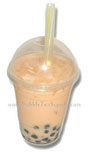
Bubble drinks are usually cool, refreshing, and a sweet drink with tapioca pearls sitting on the bottom of a clear cup. Sometimes the drink is made with fresh fruits, milk, and crushed ice to create a healthy milk shake. You can also find drinks that are made of powdered flavoring, creamer, water, and crushed ice. And if you like it like the Asians do, the cool drink usually includes a healthy tea, infused by a flavoring.
Tapioca pearls are black, but can sometimes be found to be white or transparent. Depending on the ingredients of the pearl, the color varies. I've been told that the white and translucent pearls are made of caramel, starch and chamomile root extract. The black pearl includes sweet potato, cassava root and brown sugar, which add the black color.
The consistency of tapioca pearls are somewhere between jell-o and chewing gum. They are the size of a marble. They are also known as the "boba" drink in Western China because it is described as to having the same texture as the female breasts.
A clear cup with black balls on the bottom can easily identify bubble Tea drinks. Another obvious trait is a huge fat straw. The fat straw is needed so that the tapioca pearls can be sucked up with the drink and eaten. Bubble Tea's appearance definitely makes it unique.
One thing is for certain. Bubble Tea is not a fad. It's a trend. This drink is addictive. If you've had a good one before then you know what we're talking about.


 if I ever ask Mr. Lew for a lychee bubble tea is tea me getting


 is a popular beverage in the Indian subcontinent made primarily by mixing rose syrup with vermicelli and tapioca seeds along with either milk or water. Falooda is an adaption of the Persian dessert Faloodeh and was brought to the Indian subcontinent by the Persophilic Mughal Kingdom. Basil seeds (sabja/takmaria), tutti frutti, sugar, and ice cream may be added. The vermicelli used is often made from arrowroot rather than wheat. The rose syrup may be substituted with another flavoured base to produce kesar (saffron), mango, chocolate, and fig Falooda.
Comment