How come he never bothered to learn to read or write once opportunities opened up for him and he had more money? When and how did he learn to read music?
What was the attraction why so many women fi him? He certainly is no Harry Belafonte in terms of looks and he can't read or write.
What was he like? How many kids did he have? Could he read and write?
Cheating' wife freed of murder of musician Carlton Barrett
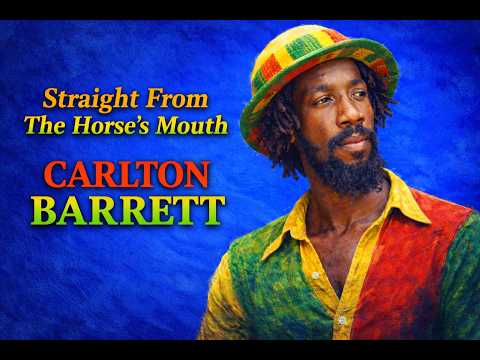
ALBERTINE Barrett, widow of Carlton Barrett, a former drummer in Bob Marley's Wailers Band, was on October 18, 1991, jailed for seven years along with the two men charged with her for conspiracy to murder her husband.Carlton Barrett was a well-known musician on the dancehall circuit at the time of his death. He was gunned down at his gate at 12 Bridgemount Park Avenue, Kingston 8 about 9:30 pm on April 17, 1987. The late Justice Ellis (retired senior puisne judge) in passing the seven-year prison term on Barrett and the other two accused, remarked at the time that the case raised the frightening spectre of contract murder. He said that a contract murder was very difficult to solve because the contractor was a stranger to the victim and police investigators therefore had little to go on to find the killer. "You were the author of the plot," the judge told Barrett as she stood in the prisoner's dock awaiting her fate. She had been recently married, the court was told, and was seven months pregnant. His Lordship added before imposing the sentence on her: "Your attorney, Tavares-Finson, in eloquence and sincerity, mentioned that you had lived a life of living hell with your husband, but it is my view that you could have (with)drawn from that without resorting to what you did." Sentenced with her were Glenroy Carter, 39, her reputed lover and taxi operator of 15 Grayden Avenue, Kingston 10, and Junior Neil, 39, also called "Bang", a mason, of 19 Seaward Drive, Kingston 11, whom the prosecution alleged was responsible for snuffing out the life of the deceased. But by 1994, after hearing evidence and legal submissions for 12 days -- following two previous trials and a successful appeal to the Jamaican Court of Appeal -- a jury retired for 25 minutes and returned a not-guilty verdict in favour of all three accused. They were then acquitted. Justice Bingham (later judge of appeal now retired) presided at this trial in the Home Circuit Court. The Crown had alleged that the three accused conspired in 1987 to kill Carlton Barrett. Cautioned statements were allegedly given by the three accused to the police in which they were alleged to have said that there was an agreement to kill him for a payment of $20,000. These statements were tendered in evidence. It was also part of the Crown's case that prior to the murder, Carter, a Jamaican who resided in the USA, was on vacation here when he met the accused Albertine Barrett and they became lovers. It was further alleged that the accused, Junior Neil, was contracted to carry out the killing. In their defence, the three accused denied giving the statements voluntarily to the police. They claimed they were beaten and forced to do so. Barrett and Carter were tried twice for the murder. In the first trial, the jury failed to arrive at a verdict. In the second, Justice Panton (later president of the Court of Appeal) ruled that Barrett's cautioned statement was inadmissible, as the prosecution had not proven that coersion played no part in the taking of her statement. The judge said then that he laid no blame on Detective Superindent Donald Brown (later ACP retired), who had testified. Carter's statement was admitted into evidence and he was freed by the jury. Barrett was defended by attorneys Tom Tavares-Finson and Dr Paul Ashley; and variously by attorneys K D Knight, QC (later government minister), Bert Samuels and Norman Harrison. Neil was represented by attorneys C J Mitchell and Gayle Nelson. The Crown's case was presented at various times by Lloyd Hibbert, deputy director of public prosecutions (now judge of the Supreme Court); Yvette Sibble, assistant director of public prosecutions; Lancelot Clarke, assistant director of public prosecutions; and Crown Counsel Cheryl Richards. A Home Circuit Court judge and jury later heard from Detective Superintendent Brown that a team of detectives headed by him began carrying out intensive investigations immediately after the murder. Brown had given evidence later, at an 'in camera' trial, that the investigations led to the arrest of the three accused and they each gave cautioned statements admitting that they were involved in a plot to kill Barrett. Giving evidence in the hearings was Oswald Brown, a justice of the peace (JP), who testified for the Crown. He said he was present when Barrett and Carter gave cautioned statements to the police. Harold Nembhard, also a JP, said he witnessed a cautioned statement given by Neil.
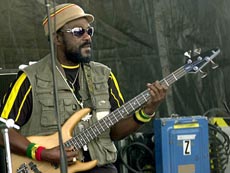
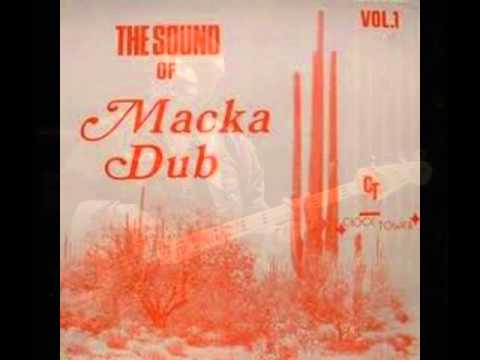
Prior to the Upsetters, Barrett played bass on big hits for producer Bunny Lee, like Everybody Needs Love by Slim Smith and Bangarang which was done by Stranger Cole.In 1970, the Upsetters re-recorded the rhythm track for Mr Brown, a song the Wailers did for Perry. Marley was reportedly so impressed with the Barretts that he invited them to join the Wailers band and they immediately made impact on the amazing Trench Town Rock. Barrett's work in the 1970s was not limited to Marley and the Wailers. He played on numerous sessions for musician/producer Augustus Pablo and played on Peter Tosh's acclaimed Legalise It album. Aston Barrett will be forever linked with The Wailers, its triumphs and post-Marley controversies. The band is one of the best touring reggae acts today and even had a minor hit song in 2009 with country star and long-time admirer Kenny Chesney.
Wanted to post an interview with him and Lee Perry but the language
This is new to me but it sounds really nice....WOW!!!
STORY OF THE SONG - One line makes a 'Bangarang'
In late 1968, Lester cut his signature tune "Bangarang." Another Jamaican #1, and hailed as a first Reggae, Ill let Lester tell it. "Well the first part and the inspiration for Bangarang, I make up the bridge, came from Kenny Dorhams Bongo Chant. Me and Rico used to play it from the late 50s when it was on the sound systems. I get the idea from this woman and her daughter. The daughter emigrate to America and then I think she encourage the mother to leave me and emigrate too."
and
For a song that has just one line of lyrics, Strange Jah Cole's Bangarang packs a wallop of a musical punch.
Not only did it hit number one when it was released in 1967, as Cole told The Sunday Gleaner, but Bangarang, on which saxophonist Lester Sterling does most of the lead duties, was covered relatively recently by Freddie McGregor. And the term's use in Parliament when the political battle got hot, after it has long ceased to be hip street terminology, seems to confirm that Bangarang has served the purpose of language preservation as a side effect to simply being a danceable tune.
In addition, Cole says there are those who claim it was one of the first reggae songs. At the time, Cole was living in Denham Town and he went to Treasure Isle on Bond Street, downtown Kingston, without being specifically asked to come there for a recording session. When he got there, he was told that producer Bunny 'Striker' Lee was running a session upstairs and he naturally went up.
Happy Lee was happy to see Cole, saying, "Pro, you are the right man I am looking for. I have a song called Bongo Chant. I want to do it Jamaican style with Lester Sterling."
"He played it for me with his mouth," Cole said, humming the melody for The Sunday Gleaner, much slower than the hit Jamaican version. As Lee finished humming, Cole picked up on the melody and sang the line "Moma no want no bangarang".
And they went into the studio to record.
When The Sunday Gleaner asks Cole what he was thinking when he did the line, he replies, "It is not what I was thinking, it is what the word means. 'Bangarang' means problems, so to break it down it is 'mother no want no problems'."
He points out that many people sing "woman no want no bangarang", but he actually said Moma.
John Crow Skank
"The reason is she don't want the children to give her any problem," Cole said.
Among the musicians with whom Lee worked at the time were Lloyd Chalmers, Aston and Carlton Barrett and Robbie Shakespeare. Cole definitely remembers keyboard player Glen Adams playing on Bangarang, introducing what was called the 'John Crow Skank' style into Jamaican music in the process.
"I have done many hit songs," Cole said, "but Bangarang stand out."
It continues to have an impact, Cole performing Bangarang at the Montreal Jazz Festival in early July when he appeared along with Leroy Sibbles, Marcia Griffiths, Hopeton Lewis, Ken Boothe, Judy Mowatt, The Tamlins and Bongo Herman.
And he has put out two CDs recently, which he hopes will create a 'bangarang' in terms of impact, Lucky Dog, done with his son 'Squiddley' Cole, and Riding High, which Strange Jah Cole produced along with G Bravo from Leggo Studio.
Wailer with 52 children waits in vain for Marley's millions
It would have been enough to give each of his 52 children a little more than £1m for their father's unacknowledged contribution to the immortal sound of Bob Marley and the Wailers.But it was not to be. Aston "Family Man" Barrett, the 60-year-old guitarist who believes he is the author of the bass line which gave Marley's late-1970s hits their inimitable rhythm, failed yesterday in his latest legal bid for a multimillion-pound slice of the Marley musical empire. This was the third time the former friend and colleague of the late Bob Marley had sought financial recompense for his contribution to the Marley sound, having undertaken legal actions in Jamaica and New York in the 1980s which, like yesterday's ruling, left him waiting in vain. At the high court in London, he claimed that he and his brother Carlton, a drummer in the band who was murdered in 1987, were still owed up to £60m from a contract signed in 1974 and royalties from six songs they had written. He alleged that after Marley died of cancer in 1981 - without leaving a will - his widow, Rita, and Island Records had denied Barrett and his brother access to the wealth generated from sales of Marley albums. But as the high court judge, Mr Justice Lewison, threw out his claim, Barrett - who was not in court to hear the ruling - may have been reminded of one of the songs he claimed to have written along with his late brother - Them Belly Full (But We Hungry). He now faces about £2m in legal costs for the trial, forcing him to sell two homes in Jamaica. The judge imposed an order barring him from taking any further action without the permission of the court. At a hearing in March, Barrett claimed Marley had promised the members of the band equal shares of the royalties from albums including Babylon By Bus, Exodus and Rastaman Vibration. Barrett also said Marley asked for his help behind his studio, 56 Hope Road in Kingston, Jamaica, after he and his brother scored international hits with The Upsetters. In 1974, Marley 's original two collaborators, Neville "Bunny" Livingstone and Peter McIntosh, left. The new group, Bob Marley and the Wailers, included the Barrett brothers and Al Anderson for the first time. Wittington Winter, a studio assistant at 56 Hope Road, told the court how the Barretts would compose songs together, Carlton - "lyrical, outspoken and often philosophical" - improvising words, he said, while "Family Man" added bass lines. "He [Carlton] would be talking and they would be playing and singing and humming ... When you say write [songs], you don't sit there with a pen and paper. It's more like an inspiration." "Aston Barrett and his brother literally created the sound of the Wailers, though not for a minute to detract from the extraordinary songwriting ability of Mr Marley," Stephen Bate, representing the musician, told the judge. "It was the Barretts' unique sound which brought the Wailers international success." The judge, however, agreed with arguments put by Island-Universal and the Marley family that Barrett surrendered his rights to any further royalties in a 1994 settlement in exchange for several hundred thousand dollars. He said: "I conclude that all the claims that Mr Aston Barrett brings in his personal capacity have been compromised by the settlement agreement." He noted that Barrett, who cannot read or write, had the "greatest difficulty" in answering questions about business dealings. "[Barrett] was plainly close to Bob Marley himself, whom he trusted implicitly," he said. "At this remove of time, his recollection of events was hazy; and I also consider that, as often happens, he has reconstructed events in his mind according to how he would like them to have been." An earlier US action was concluded by a settlement in which Island agreed to pay £264,000 and legal costs on the understanding that the Wailers would cease any further legal action. Members of the Wailers claim they were coerced into signing the deal, a claim Mr Justice Lewison rejected. He also dismissed attacks against the honesty of Rita Marley, and said she had done her best over the years for the Wailers. Rita Marley and Island Records founder Chris Blackwell had both played down the contributions of the Barrett brothers during the trial. In a statement, the Marley family expressed delight at the decision: "For the last four years Aston 'Family Man' Barrett has persisted in this hurtful and extremely expensive claim which was actually settled in 1994. The family of Bob Marley are delighted that the claim has now been rejected in full."
We process personal data about users of our site, through the use of cookies and other technologies, to deliver our services, personalize advertising, and to analyze site activity. We may share certain information about our users with our advertising and analytics partners. For additional details, refer to our Privacy Policy.
By clicking "I AGREE" below, you agree to our Privacy Policy and our personal data processing and cookie practices as described therein. You also acknowledge that this forum may be hosted outside your country and you consent to the collection, storage, and processing of your data in the country where this forum is hosted.


 Tweet
Tweet
 fi him? He certainly is no Harry Belafonte in terms of looks and he can't read or write.




Comment