

 Tweet
Tweet
Re: Sweet! Jamaican fruits...
Coconut
Can one plant have so many use? We use the husk to make floor brush, and nutten can make that hard wood/board floor shine like a willy penny than a coconut brush.
Broom - raise yu han' if yu use to tek di coconut bough and use it as broom to sweep up di yard!
Forget the mineral water, a nice refreshing glass of coconut water will clean out yu kidney and liver.
What about the meat? Soft or hard, it's nice cyaan done. Grater the hard white meat and juice it for your rice and peas. Use the grated trash from the meat for gizzadah and grater cake, or just mix it with some dark brown sugar.
Who in here can climb or could climb a coconut tree? Well, not me, mi did fraid a height. [img]/forums/images/graemlins/laugh.gif[/img]

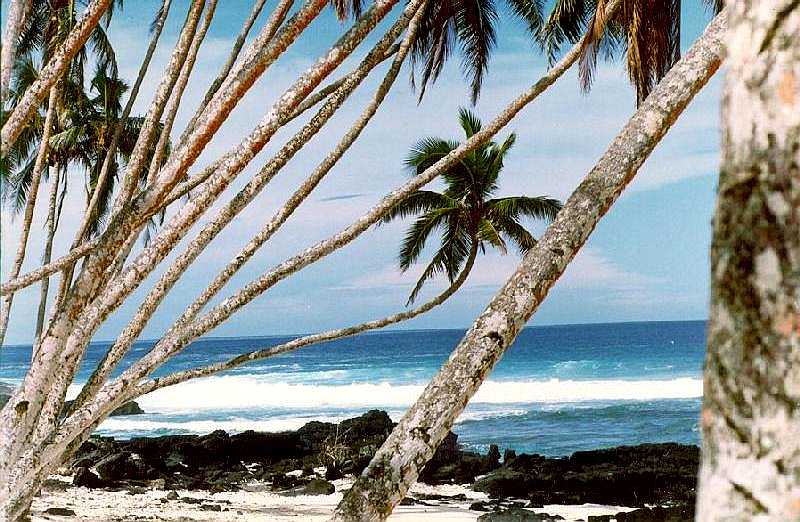

Fruit Facts
The ripe fruit of the coconut palm has a hard shell covered by a fibrous outer coat and contains an edible kernel with the coconut in the centre. The nut is split open, and the edible kernel is dried to a moisture content below 6% to prevent deterioration. The dried meat, called copra, is then subjected to pressing or extraction. The residue is known as coconut (oil) meal (or cake), copra meal or poonac. Depending on the milling equipment, the oil residue in the marketed product ranges from 1% to 22%. Hydraulic press residue is usually marketed in flat round cakes, and the other grades are sold in dark-coloured lumps. The product known as sediment meal is quite distinct, however, as it is recovered from the filter pads of the oil-straining presses. On the average 1000 nuts will produce about 180 kg of copra, and the processing of this amount of copra yields about 110 kg of oil and 55 kg of meal, the remainder being evaporated moisture and unavoidable losses. The fibrous coat (husk) has no feed value. The dust from processing the husks into fibre (coir dust) has been suggested as a carrier for molasses. Coconut orchards can be grazed when the leaves can no longer be reached by the grazing animals. It is often necessary to apply extra fertilizer to orchards that are being grazed as the coconut leaves tend to become yellow.
COCONUT WATER. Coconut water is usually wasted when the nuts are split open. The dry matter content of coconut water declines as the nut matures and is a meagre source of nutrients when the nuts are harvested for copra. On estates the coconut water is sometimes fed to cattle in place of ordinary drinking water. At first it has purgative effect, but cattle soon become accustomed to it. It has also been used as a substrate for the microorganism Rhodotorula pilimanae and as an ingredient of a semen extender for artificial insemination.
COPRA. Copra is usually too expensive to use as an animal feed, though it has been fed to pigs and poultry with good results. As the fat in copra contains only small amounts of unsaturated fatty acids, its consumption leads to firm body fat and good flavour.
Source http://www.fao.org/ag/aga/agap/frg/afris/Data/498.HTM
Coconut
Can one plant have so many use? We use the husk to make floor brush, and nutten can make that hard wood/board floor shine like a willy penny than a coconut brush.
Broom - raise yu han' if yu use to tek di coconut bough and use it as broom to sweep up di yard!
Forget the mineral water, a nice refreshing glass of coconut water will clean out yu kidney and liver.
What about the meat? Soft or hard, it's nice cyaan done. Grater the hard white meat and juice it for your rice and peas. Use the grated trash from the meat for gizzadah and grater cake, or just mix it with some dark brown sugar.
Who in here can climb or could climb a coconut tree? Well, not me, mi did fraid a height. [img]/forums/images/graemlins/laugh.gif[/img]
Fruit Facts
The ripe fruit of the coconut palm has a hard shell covered by a fibrous outer coat and contains an edible kernel with the coconut in the centre. The nut is split open, and the edible kernel is dried to a moisture content below 6% to prevent deterioration. The dried meat, called copra, is then subjected to pressing or extraction. The residue is known as coconut (oil) meal (or cake), copra meal or poonac. Depending on the milling equipment, the oil residue in the marketed product ranges from 1% to 22%. Hydraulic press residue is usually marketed in flat round cakes, and the other grades are sold in dark-coloured lumps. The product known as sediment meal is quite distinct, however, as it is recovered from the filter pads of the oil-straining presses. On the average 1000 nuts will produce about 180 kg of copra, and the processing of this amount of copra yields about 110 kg of oil and 55 kg of meal, the remainder being evaporated moisture and unavoidable losses. The fibrous coat (husk) has no feed value. The dust from processing the husks into fibre (coir dust) has been suggested as a carrier for molasses. Coconut orchards can be grazed when the leaves can no longer be reached by the grazing animals. It is often necessary to apply extra fertilizer to orchards that are being grazed as the coconut leaves tend to become yellow.
COCONUT WATER. Coconut water is usually wasted when the nuts are split open. The dry matter content of coconut water declines as the nut matures and is a meagre source of nutrients when the nuts are harvested for copra. On estates the coconut water is sometimes fed to cattle in place of ordinary drinking water. At first it has purgative effect, but cattle soon become accustomed to it. It has also been used as a substrate for the microorganism Rhodotorula pilimanae and as an ingredient of a semen extender for artificial insemination.
COPRA. Copra is usually too expensive to use as an animal feed, though it has been fed to pigs and poultry with good results. As the fat in copra contains only small amounts of unsaturated fatty acids, its consumption leads to firm body fat and good flavour.
Source http://www.fao.org/ag/aga/agap/frg/afris/Data/498.HTM

 love those mango pics and the info about the coconut...


Comment