

 Tweet
Tweet
BBC, CNN r reporting that he has died…http://www.bbc.co.uk/news/world-africa-25249520
-
-
Chronology
To condense all of Mr Nelson Mandela's achievements into one chronology would be impossible; as a result, we do not claim that our work here is comprehensive. Below you will find a chronology of important events in his life. It is a work in progress and we are happy to receive your comments or additions.
Year Date Event
1918 July 18 Born Rolihlahla Mandela at Mvezo in the Transkei
1925 Attends primary school near Qunu (receives the name ‘Nelson’ from a teacher)
1934 Undergoes initiation; Attends Clarkebury Boarding Institute in Engcobo
1937 Attends Healdtown, the Wesleyan College at Fort Beaufort
1939 Enrols at the University College of Fort Hare, in Alice
1940 Expelled
1941 Escapes an arranged marriage; becomes a mine night watchman; Starts articles at the law firm Witkin, Sidelsky & Eidelman
1942 Completes BA through the University of South Africa (UNISA)
1942 Begins to attend African National Congress (ANC) meetings informally
1943 Graduates with BA from Fort Hare; Enrols for an LLB at Wits University
1944 Co-founds the ANC Youth League (ANCYL); marries Evelyn Ntoko Mase – they have four children: Thembekile (1945); Makaziwe (1947 – who dies after nine months); Makgatho (1950); Makaziwe (1954)
1948 Elected national secretary of the ANCYL
1951 Elected President of the ANCYL
1952 Defiance Campaign begins; Arrested and charged for violating the Suppression of Communism Act; Elected Transvaal ANC President; Convicted with J.S Moroka, Walter Sisulu and 17 others under the Suppression of Communism Act; Sentenced to nine months imprisonment with hard labour, suspended for two years; Elected first of ANC deputy presidents; Opens South Africa’s first black law firm with Oliver Tambo
1953 Devises the M-Plan for the ANC’s future underground operations
1955 Watches as the Congress of the People at Kliptown launches the Freedom Charter
1956 Arrested and joins 155 others on trial for Treason. All are acquitted by 29 March 1961
1958 Divorces Evelyn Mase; Marries Nomzamo Winnie Madikizela – they have two daughters: Zenani (1959) and Zindzi (1960)
1960 March 21 Sharpeville Massacre
March 30 A State of Emergency imposed and he is among thousands detained
April 8 The ANC is banned
1961 Goes underground; Umkhonto weSizwe (MK) is formed
1962 January 11 Leaves the country for military training and to garner support for the ANC
July 23 Returns to South Africa
August 5 Arrested near Howick in KwaZulu-Natal
November 7 Sentenced to five years in prison for incitement and leaving the country without a passport
1963 May 27 Sent to Robben Island
June 12 Returned to Pretoria Local Prison
October 9 Appears in court for the first time in what becomes known as the Rivonia Trial, with Walter Sisulu, Denis Goldberg, Govan Mbeki, Ahmed Kathrada, Lionel 'Rusty' Bernstein, Raymond Mhlaba, James Kantor, Elias Motsoaledi and Andrew Mlangeni
December 3 Pleads not guilty to sabotage in what becomes known as the Rivonia Trial
1964 June 11 All except Rusty Bernstein and James Kantor are convicted and sentenced (June 12) to life
June 13 Arrives on Robben Island
1969 July 13 Thembekile is killed in a car accident
1982 March 31 Mr Mandela, Sisulu, Raymond Mhlaba and Andrew Mlangeni and later Ahmed Kathrada are sent to Pollsmoor Prison
1985 February 10 Rejects, through his daughter, Zindzi, South African President PW Botha's offer to release him if he renounces violence
1985 November 3 Admitted to the Volks Hospital for prostate surgery
November 23 Discharged from Volks Hospital and returned to Pollsmoor Prison
1988 August 12 Admitted to Tygerberg Hospital where he is diagnosed with Tuberculosis
August 31 Admitted to Constantiaberg MediClinic
December 7 Moved to Victor Verster Prison in Paarl where he was held for 14 months in a cottage
1990 February 2 ANC is unbanned
1990 February 11 Released
March 2 Elected ANC Deputy President
1993 December 10 Awarded the Nobel Peace Prize with FW de Klerk
1994 April 27 Votes for the first time in his life
May 9 Elected by Parliament as first president of a democratic South Africa
May 10 Inaugurated as President of the Republic of South Africa
December 14 Launches his autobiography Long Walk to Freedom
1995 Establishes the Nelson Mandela Children's Fund
1996 Divorces Winnie Mandela
1998 July 18 Marries Graça Machel on his 80th birthday
1999 Steps down after one term as President, establishes the Nelson Mandela Foundation
2001 Diagnosed with prostate cancer
2003 Establishes the Mandela Rhodes Foundation
2004 June 1 Announces that he will be stepping down from public life
2005 January 6 Announces that his eldest son Makgatho had died of AIDS
2007 April 13 Attends the installation of his grandson Mandla as chief of the Mvezo Traditional Council
2008 July 18 Turns 90 years old, asks future generations to continue the fight for social justice
2010 October 12 His second book Conversations with Myself is published
2011 January Is admitted to hospital in Johannesburg where he was diagnosed with a chest infection. He is discharged after two nights
2011 May 16 Votes in the local government elections
2011 June 27 His book Nelson Mandela By Himself: The Authorised Book of Quotations is launched
2011 June 21 Is visited at home by American First Lady Michelle Obama and her daughters Sasha and Malia
Is discharged from hospital
December 5
Died 5th December 2013Comment
-
20 Things You May Not Know About Nelson Mandela
Few lives have been thoroughly chronicled as that of former South African President Nelson Mandela, who died on Thursday at the age of 95.
From his earliest days as a scion of South African royalty to his activism against racism and apartheid in South Africa, Mandela and his heroism has literally created history for more than 75 years. But even international icons such as Mandela have little-known facts in their backgrounds.
Here are 20 facts you may not know about Madiba.
1) Nelson Mandela was born into the royal Thembu family. [Source: About.com]
2) His first treason trial lasted five years from 1956 to 1961. Mandela was found not guilty. [Source: About.com]
3) Though Mandela rejected violence in his later years, he co-founded the militant Umkhonto we Sizwe in 1961 which bombed government targets. [Source: Encyclopedia Britannica]
4) Most people know Mandela was imprisoned at the Robben Island prison but Mandela was also held at Pollsmoor Prison and Victor Verster Prison during his 27 year sentence. [Source: CNN.com]
5) Mandela is the only person to ever receive both the US Presidential Medal of Freedom, the Soviet Order of Lenin and the Nobel Peace Prize. [Source: Wikipedia.com]
6) Mandela’s name, Rolihlahla, means troublemaker. [Source: About.com]
7) Mandela’s father, Gadla Henry Mphakanyiswa, was a local chief in the Transkei region and had four wives. [Source: history.com]
8) Mandela was baptized a Methodist. [Source: Biography.com]
9) Mandela was circumcised at the age of 16 in a ceremony called Dalibunga. [Source: Euronews]
10) Ballroom dancing is among Mandela’s skills. [Source: Google Books]
11) Prior to his death, he was the only living person to be made an honorary Canadian citizen. [Source: Canadian Broadcasting Channel]
12) When Stevie Wonder dedicated to Mandela his 1985 Oscar Award for the song “I Just Called to Say I Love You,” Wonder’s music was banned by the South African Broadcasting Corporation. [Source: Los Angeles Times]
13) In 1998, Mandela married his third wife, Graca Machel, at the age of 80. She was the widow of former Mozambican president and ally on South Africa’s freedom struggle, Samora Michel, who had died 12 years earlier. [Source: The Telegraph]
14) Mandela appeared in the 1992 film “Malcolm X.” [Source: imdb.com]
15) In the days following his release from prison in 1990, Mandela stayed at the home of Archbishop Desmond Tutu. [Source: NPR]
16) President Ronald Reagan considered Mandela a communist terrorist and worked against the African National Congress. [Source: Salon]
17) Mandela’s first son, Thembi, died in a car accident in 1969. [Source: Wikipedia.com]
18) Mandela’s eyesight was permanently damaged from sun glare while being forced to work in prison without sunglasses. [Source: Globalpost.com]
19) In 1953, Mandela and ANC associate, Oliver Tambo, founded the only Black African law firm in South Africa. [Source: Wikipedia.com]
20) Mandela was 9-years-old when his father died of a lung disease. [Source: Biography.com]Comment
-
I was hoping him would have recovered, an at least mek di 100. Rest in peace oh Great One!Last edited by j-kid; 12-05-2013, 08:33 PM.Comment
-
Good night Madiba.Comment
-

Comment
-
Spare a thought for Graca Machel . She was married to Madibas hero Samora Machel, then married Nelson Mandela. And survived them both.
She married the President of the country that killed her first husband, that is reconciliation.Comment
-
Check out this African Bloggers perspective...he turned off comments on his page as I guess he is expecting a "fyah bun"...
Mandela will never, ever be your minstrel.
Source/Writer: Musa Okwonga - okwonga.com
Dear revisionists, Mandela will never, ever be your minstrel. Over the next few days you will try so, so hard to make him something he was not, and you will fail. You will try to smooth him, to sandblast him, to take away his Malcolm X. You will try to hide his anger from view. Right now, you are anxiously pacing the corridors of your condos and country estates, looking for the right words, the right tributes, the right-wing tributes. You will say that Mandela was not about race. You will say that Mandela was not about politics. You will say that Mandela was about nothing but one love, you will try to reduce him to a lilting reggae tune. “Let’s get together, and feel alright.” Yes, you will do that.
You will make out that apartheid was just some sort of evil mystical space disease that suddenly fell from the heavens and settled on all of us, had us all, black or white, in its thrall, until Mandela appeared from the ether to redeem us. You will try to make Mandela a Magic Negro and you will fail. You will say that Mandela stood above all for forgiveness whilst scuttling swiftly over the details of the perversity that he had the grace to forgive.
You will try to make out that apartheid was some horrid spontaneous historical aberration, and not the logical culmination of centuries of imperial arrogance. Yes, you will try that too. You will imply or audaciously state that its evils ended the day Mandela stepped out of jail. You will fold your hands and say the blacks have no-one to blame now but themselves.
Well, try hard as you like, and you’ll fail. Because Mandela was about politics and he was about race and he was about freedom and he was even about force, and he did what he felt he had to do and given the current economic inequality in South Africa he might even have died thinking he didn’t do nearly enough of it. And perhaps the greatest tragedy of Mandela’s life isn’t that he spent almost thirty years jailed by well-heeled racists who tried to shatter millions of spirits through breaking his soul, but that there weren’t or aren’t nearly enough people like him.
Because that’s South Africa now, a country long ago plunged headfirst so deep into the sewage of racial hatred that, for all Mandela’s efforts, it is still retching by the side of the swamp. Just imagine if Cape Town were London. Imagine seeing two million white people living in shacks and mud huts along the M25 as you make your way into the city, where most of the biggest houses and biggest jobs are occupied by a small, affluent to wealthy group of black people. There are no words for the resentment that would still simmer there.
Nelson Mandela was not a god, floating elegantly above us and saving us. He was utterly, thoroughly human, and he did all he did in spite of people like you. There is no need to name you because you know who you are, we know who you are, and you know we know that too. You didn’t break him in life, and you won’t shape him in death. You will try, wherever you are, and you will fail.Out of Many One People Online
http://www.jamaicans.comComment
-
yeah saw that piece
actually it was the reference to a "lilting reggae tune" that caught my eye on another site, they used that as the headlineComment
-
1) "Difficulties break some men but make others. No axe is sharp enough to cut the soul of a sinner who keeps on trying, one armed with the hope that he will rise even in the end."
2) "It always seems impossible until it's done."
3) "If I had my time over I would do the same again. So would any man who dares call himself a man."
4) "I like friends who have independent minds because they tend to make you see problems from all angles."
5) "Real leaders must be ready to sacrifice all for the freedom of their people."
6) "A fundamental concern for others in our individual and community lives would go a long way in making the world the better place we so passionately dreamt of."
7) "Everyone can rise above their circumstances and achieve success if they are dedicated to and passionate about what they do."
8) "Education is the most powerful weapon which you can use to change the world."
9) "I learned that courage was not the absence of fear, but the triumph over it. The brave man is not he who does not feel afraid, but he who conquers that fear."
10) "For to be free is not merely to cast off one's chains, but to live in a way that respects and enhances the freedom of others."
11) "Resentment is like drinking poison and then hoping it will kill your enemies."
12) "Lead from the back — and let others believe they are in front."
13) "Do not judge me by my successes, judge me by how many times I fell down and got back up again."
14) "I hate race discrimination most intensely and in all its manifestations. I have fought it all during my life; I fight it now, and will do so until the end of my days."
15) "A good head and a good heart are always a formidable combination."Comment
-
-
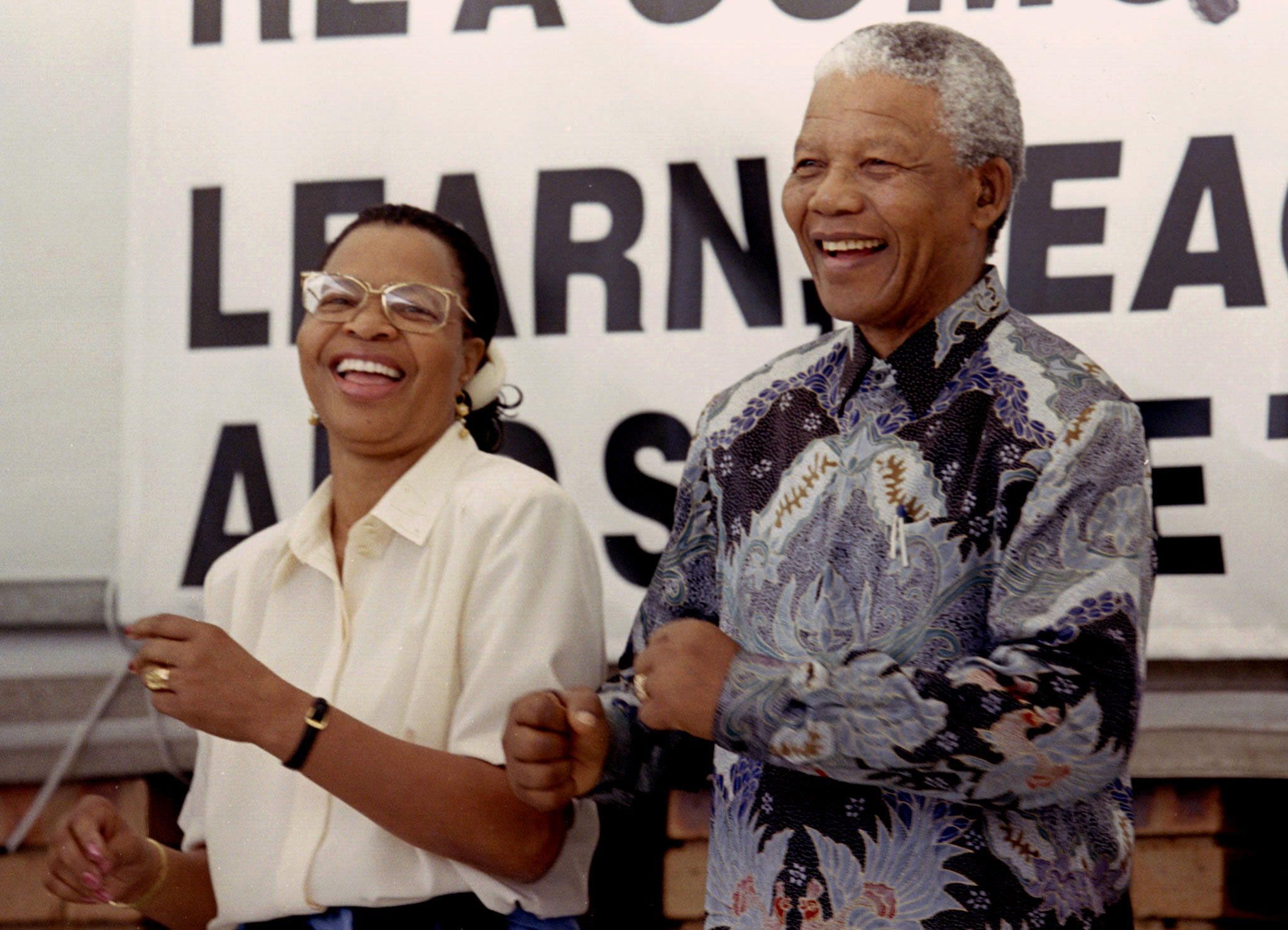
Nelson Mandela’s Third Wife Graça Machel: First Lady Of Two Nations And A Leader In Her Own RightAs the world mourns Nelson Mandela, a spotlight also extends to his third wife, Graça Machel, who shared the final years of one of the world’s most respected leaders, and was the first lady of Mozambique when she was married to Mozambique’s first president, but opted to carve out a niche of her own in humanitarian efforts rather than stay in the shadows of her statesmen husbands.
Machel, 68, who was the widow of Samora Machel, Mozambique’s firebrand Marxist independence leader and first president, has the unique honor to have served as the first lady of two different nations. Machel retained the surname of her first husband, who was killed in a plane crash in 1986 close to the South African border. The white South African regime is suspected by many of engineering the crash.
Machel was often dubbed Mozambique’s Jackie Kennedy for her grace, sophistication and dignity, and also for the tragic fate their husbands shared. Yet, she has publicly expressed displeasure for being called “Samora’s wife,” saying: “I’m me.”
Machel married an 80-year-old Mandela two years after the latter’s messy divorce from his second wife, Winnie, in 1996. However, South Africans were not fully convinced that the former first lady of a neighboring country was the best match for their leader.
But, Machel “wasn’t pushy about being the new Mrs. Mandela,” according to Charlayne Hunter-Gault, a former American journalist based in Johannesburg, who was quoted in the Washington Post, in July. “She didn’t flaunt it, and she showed a lot of respect for the feelings of people in South Africa.” Hunter-Gault said.
Machel was born Graça Simbine on Oct. 17, 1945 in a family of peasants on the coast of Mozambique, under Portuguese rule. Machel, whose father died before her birth, received the best education her family could afford and won a scholarship to high school in Mozambique’s capital, Maputo, where she was the only black African in a class full of white students.
Machel’s political ideologies were deeply influenced by her experience during her school years: “Why is it that I’m made to feel strange in my own country? They're the foreigners, not me. Something is wrong here,” Machel said about it later, as quoted by The Guardian.
She was trained as a guerilla fighter during her years in Frelimo, or the Front for the Liberation of Mozambique, and would later meet and marry Samora Machel, the movement’s top leader. After the nation won independence from Portugal, Graça became the education minister and played a key role in boosting the nation’s literacy rate.
She has been honored with several awards for her humanitarian activities, such as the Laureate of Africa Prize for Leadership for the Sustainable End of Hunger in 1992, and the Nansen Medal for her contribution to the welfare of refugee children in 1995.
Machel once said, according to the Guardian, about being married to two leaders who played key roles in the history of two African nations: “It's not two leaders who fell in love with me, but two real people. I feel privileged that I have shared my life with two such exceptional men.”Comment
-
Mandela: Winnie made me the loneliest manThere was a fleeting moment when the sadness left Nelson Mandela's face at his divorce trial in Johannesburg yesterday. It was when his estranged wife, Winnie, first entered the courtroom. He caught sight of her, and for a moment, smiled. She, in response, turned away.
If there were any lingering doubts in the South African President's mind over his decision to end his 38 years with a woman whom he once worshipped, they must have faded away in that moment.
It was not long after that Mr Mandela told a court packed with journalists, television cameras and the curious: "If the entire universe persuaded me to reconcile with the defendant I would not ... I am determined to get rid of the marriage."
Once the icons of the anti-apartheid struggle, Nelson and Winnie Mandela are almost certain to be, finally and officially, divorced.
Mr Mandela's lawyer, Wim Trengove, argued that the President's marriage was beyond repair. He said Mr Mandela rejected his estranged wife's assertion that any arbitration could bring the two back together. There was, Mr Trengove said, simply nothing to salvage.
But it took the man himself to bring home that message. Composed but visibly sorrowful, Mr Mandela told how his wife accomplished in two years what 27 years in prison failed to achieve: she made him feel humiliated and lonely. "Ever since I came back from prison, not once has the defendant ever entered our bedroom while I was awake," the 77-year-old President told the Rand Supreme Court in Johannesburg.
"The bedroom is where a man and woman discuss the most intimate details. There were so many things I wanted to discuss with her, but she is the type of person who fears confrontation. I was the loneliest man during the period I stayed with her."
The President initiated divorce proceedings in 1992, two years after his release from jail. Mr Mandela told the court that it was her "brazen conduct" which convinced him to end the marriage. He then recounted how in August 1992 he was given a letter supposedly written by Mrs Mandela which confirmed his suspicions of her infidelity with a young lawyer from the African National Congress. He said had tried to make the parting as painless as possible for the benefit of their two daughters, Zindzi and Zenani, but felt compelled to disclose the affair. "I did not wish us to wash our dirty linen in public," he said.
Mr Mandela will be questioned today by his wife's lawyer. Mrs Mandela is expected to take the stand tomorrow when her counter claim to assess her husband's estate is heard; she is seeking at least half. It may be a small price compared to what the President said she has already taken.Comment
-
The Final Fight of Nelson Mandela's LifeSix years after retiring from a political career, Nelson Mandela called a news conference in January 2005 at his home in Johannesburg, South Africa, to make a stunning announcement."My son has died of AIDS," Mandela said at the conference.
His son Makagtho Mandela was 54 years old. Two other family members of Mandela's later died of complications from the disease. His public admission is considered a pivotal moment in how South Africa and much of the continent would come to view the AIDS epidemic.
"We must not hide the cause of death of our respected family because that is the only way in which we can make people understand that even HIV is an ordinary illness," Mandela told a news conference.
Although an estimated 5 million South Africans were infected with HIV at the time and 2 million had already died, AIDS was a shameful and taboo topic. That stigma had thwarted attempts to prevent and treat the disease.
"For him to actually stand up and admit that there was something in his family, something in his own son, was important because it normalized HIV," Dr. Wafaa El-Sadr, director of the International Center for AIDS Care and Treatment Programs, told ABC News' "20/20."
Infographic: The Life of Nelson Mandela
As president of South Africa, Mandela remained mostly silent on the matter of AIDS. But in the last decade of his life and in midst of the private loss of his son, Mandela began his final campaign: a fight against AIDS in South Africa.
Mandela created the 46664 charity, named for his old prison number, 466, and 1964, the year he was jailed, which is now used to raise awareness and money in the fight against AIDS.
He even appeared at huge international AIDS awareness events, such as the 46664 concert played in Cape Town, South Africa, the first in a series of anti-AIDS concerts.
Five Unexpected Facts About Nelson Mandela
"I would love to enjoy the peace and quiet of retirement, but I know that, like many of you, I cannot rest easily while our beloved continent is ravaged by a deadly epidemic," Mandela told the crowd at a benefit concert for AIDS relief in George, South Africa, in March 2005.
Mandela's presence at these AIDS relief concerts was moving, with thousands of people attending the events and funds raised to increase AIDS awareness.
Read Mandela's Most Inspirational Quotes
"When the history of our times is written, will we be remembered as the generation that turned our backs in a moment of global crisis or will it be recorded that we did the right thing?" Mandela said at a concert in Tromso, Norway, in June 2005.
The legacy of Mandela's fight for the protection of children and those living with HIV and AIDS will continue to inspire South Africa--and the world--for generations to come.
http://abcnews.go.com/International/...ry?id=21125509
Dhladhla/AFP/Getty Images
Comment



Comment