

 Tweet
Tweet
7 Facts That Shatter the Theories About Who Really Wrote the Bible
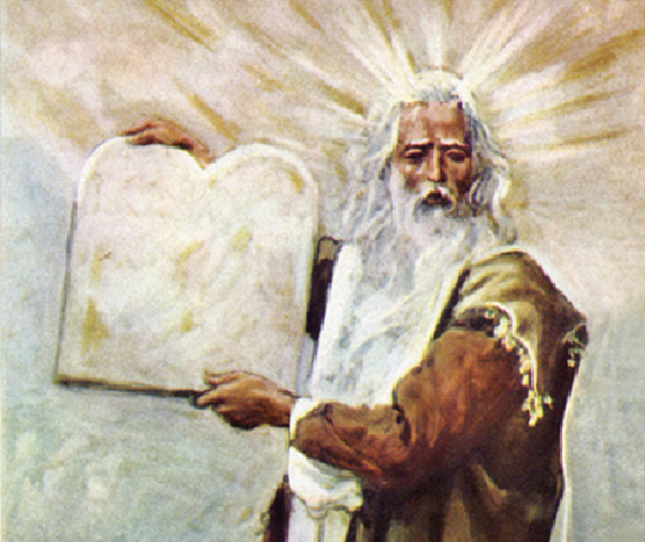
Moses Did Not Write the Torah/Pentateuch
Jews and Christians widely believe that Moses wrote the first five books in the Bible. However, beginning with some medieval rabbis, doubts have been raised. Among the details that challenged the notion that Moses was the author are as follows:
The Edomite kings listed in Genesis 36 did not live until after Moses was dead.
Moses is referred to in the third person in several passages.
There are places named that Moses could not have known (he never entered the Promised Land).
The Hebrew of the text includes terms that were developed long after Moses’ death.
Moses’ death is included in Deuteronomy.
Camels are listed in Abraham’s retinue, but camels were domesticated around 1000, long after Abraham (1550 B.C.) and even Moses (1250 B.C.).
The text mentions Philistines in the time between Abraham and Moses, but the Philistines did not enter the coastal areas of Canaan until around 1200 B.C. (after Moses).
The text says, “At that time the Canaanites were in the land” (Gen 12:6), which implies the author writes in a time when they were no longer there — but they were clearly there when Joshua led the Israelites into Canaan after Moses’ death.
Statements such as “before any king ruled over the Israelites” (Gen 36:31) imply a time in the writer’s mind when kings had ruled over the Israelites — but none ever did in Moses’ lifetime.
In Deuteronomy 34, the writer says, “There never arose another prophet in Israel like Moses.” It didn’t seem to make sense that Moses — or even God, in Moses’ time — would write such words.
Moses Did Not Write the Torah/Pentateuch
Jews and Christians widely believe that Moses wrote the first five books in the Bible. However, beginning with some medieval rabbis, doubts have been raised. Among the details that challenged the notion that Moses was the author are as follows:
The Edomite kings listed in Genesis 36 did not live until after Moses was dead.
Moses is referred to in the third person in several passages.
There are places named that Moses could not have known (he never entered the Promised Land).
The Hebrew of the text includes terms that were developed long after Moses’ death.
Moses’ death is included in Deuteronomy.
Camels are listed in Abraham’s retinue, but camels were domesticated around 1000, long after Abraham (1550 B.C.) and even Moses (1250 B.C.).
The text mentions Philistines in the time between Abraham and Moses, but the Philistines did not enter the coastal areas of Canaan until around 1200 B.C. (after Moses).
The text says, “At that time the Canaanites were in the land” (Gen 12:6), which implies the author writes in a time when they were no longer there — but they were clearly there when Joshua led the Israelites into Canaan after Moses’ death.
Statements such as “before any king ruled over the Israelites” (Gen 36:31) imply a time in the writer’s mind when kings had ruled over the Israelites — but none ever did in Moses’ lifetime.
In Deuteronomy 34, the writer says, “There never arose another prophet in Israel like Moses.” It didn’t seem to make sense that Moses — or even God, in Moses’ time — would write such words.


Comment