

 Tweet
Tweet
Originally posted by Tropicana
View Post
-
Please Continue posting what you are posing because every article have been supporting what I have been saying. -
Originally posted by Tropicana View Post
The first video is about affirmative action and the second would not play......you seen to be getting confusdComment
-
Of course I am reading what I am posting. Noting what you have highlighted, if there is no chasm, why is there a need to bridge it.
YOU are the one who is insisting that there are no issues and the students are all getting along just fine...
This is nothing new. This issue has been going on and well documented for some time now. You made the mistake of picking Harvard where there has been a lot of press for some time about the issues. The gap in admissions has widened even moe since this was published in 2007 fuelling more tensions.
Something in the crowd made Shirley Wilcher wonder. As a college graduate in the early 1970s, her black classmates were like herself _ born in the United States, to American parents. But at an alumni reunion at Mount Holyoke College last year, she saw something different and asked for admissions data to prove it.
"My suspicions were confirmed," said Wilcher, now the executive director of the American Association for Affirmative Action. She found a rise in the number of black students from Africa and the Caribbean, and a downturn in admissions of native blacks like her.
A study released this year put numbers on the trend. Among students at 28 top U.S. universities, the representation of black students of first- and second-generation immigrant origin (27 percent) was about twice their representation in the national population of blacks their age (13 percent). Within the Ivy League, immigrant-origin students made up 41 percent of black freshmen.
Wilcher would like to know why. She asks if her cause has lost its way on U.S. campuses, with the goal of correcting American racial injustices replaced by a softer ideal of diversity _ as if any black student will do.
The study, published in the American Journal of Education, found no definitive answer as to why the change is happening. However, "folks I know personally who have worked in admissions have told me that they weren't surprised," said Camille Charles, a University of Pennsylvania professor who wrote the study with three Princeton University professors.
The researchers looked at data from a national survey of 1,028 freshmen at 28 top colleges and universities in 1999. The eight-year-old material was used because it was specially designed to help find reasons for underachievement by minorities at colleges and universities.
In terms of student background, it found few differences, noting only that far more black immigrant students had fathers with college or advanced degrees than did other black students.
But the authors suggested that the reason for high proportion of immigrant students may lie in how the students are perceived.
"To white observers, black immigrants seem more polite, less hostile, more solicitous, and 'easier to get along with,'" the study said. "Native blacks are perceived in precisely the opposite fashion."
That idea immediately found detractors.
"I can't speak for white people, but that's crazy," said Adoma Adjei-Brenyah, a Columbia University student with college-educated parents from Ghana.
The director of public policy for the National Association for College Admission Counseling agreed. "I reject the notion that admissions officers are somehow deliberately doing this," David Hawkins said.
One legal expert explained the bump in black immigrants by saying that now, decades since the civil rights movement's peak, college diversity is aimed less at correcting American racial injustices and more at creating a variety of perspectives on campus.
Besides, "how many colleges and universities are looking to stand up and say, 'I'm continuing not to cure the problems of the past?'" said Arthur Coleman, a lawyer who co-wrote "Admissions and Diversity After Michigan: The Next Generation of Legal and Policy Issues."
Students agreed the subject of native vs. immigrant background remains sensitive.
Last month, a Harvard Black Students Association message board asked, "When we use the term 'black community,' who is included in this description?" A lively debate ensued, with some posters complaining that African students were getting an admissions boost without having faced the historical suffering of U.S. blacks.
Jason Lee, the Harvard group's president, echoed another thought in the discussion. "There's a historical sense that black Americans are disrespected by immigrants," he said. "Parents don't want their kids to play with them, don't want bad habits rubbing off on them. There's a bit of tension there."
But Adjei-Brenyah, the president of the African Students Association at Columbia, argued that drawing an admissions distinction based on suffering under slavery is false. "If you're going to make a slavery case, people from the Caribbean were also displaced and enslaved. How do you begin to differentiate?" he said.
The issue of native vs. immigrant blacks took hold at Harvard in 2004, when professors Henry Louis Gates and Lani Guinier pointed out at a black alumni reunion that a majority of attendees were of African or Caribbean origin.
Gates and Guinier cited demographic information in the "Black Guide to Life at Harvard," a survey of 70 percent of black undergraduates published by the BSA.
In part because of the issue, native black alumni have distanced themselves from Harvard, Lee said. That means fewer are conducting admissions interviews with prospective American-born black students, Lee said, so interviewers from other backgrounds, including immigrant backgrounds, step in.
Comment
-
Originally posted by Tropicana View Post
The fact that differing nationalities play and or work together does not mean racism is dead, or anti-immigrant feels are all gone.......Education is the answer not stereotyping.
Racism is serious, anti-immigrant feels among blacks is minor in comparisonComment
-
Originally posted by Tropicana View Post
Please post when and where I said there was no issues between local and immigrants blacks?
Something in the crowd made Shirley Wilcher wonder. As a college graduate in the early 1970s, her black classmates were like herself _ born in the United States, to American parents. But at an alumni reunion at Mount Holyoke College last year, she saw something different and asked for admissions data to prove it.
"My suspicions were confirmed," said Wilcher, now the executive director of the American Association for Affirmative Action. She found a rise in the number of black students from Africa and the Caribbean, and a downturn in admissions of native blacks like her.
A study released this year put numbers on the trend. Among students at 28 top U.S. universities, the representation of black students of first- and second-generation immigrant origin (27 percent) was about twice their representation in the national population of blacks their age (13 percent). Within the Ivy League, immigrant-origin students made up 41 percent of black freshmen.
Wilcher would like to know why. She asks if her cause has lost its way on U.S. campuses, with the goal of correcting American racial injustices replaced by a softer ideal of diversity _ as if any black student will do.
The study, published in the American Journal of Education, found no definitive answer as to why the change is happening. However, "folks I know personally who have worked in admissions have told me that they weren't surprised," said Camille Charles, a University of Pennsylvania professor who wrote the study with three Princeton University professors.
The researchers looked at data from a national survey of 1,028 freshmen at 28 top colleges and universities in 1999. The eight-year-old material was used because it was specially designed to help find reasons for underachievement by minorities at colleges and universities.
In terms of student background, it found few differences, noting only that far more black immigrant students had fathers with college or advanced degrees than did other black students.
But the authors suggested that the reason for high proportion of immigrant students may lie in how the students are perceived.
"To white observers, black immigrants seem more polite, less hostile, more solicitous, and 'easier to get along with,'" the study said. "Native blacks are perceived in precisely the opposite fashion."
That idea immediately found detractors.
"I can't speak for white people, but that's crazy," said Adoma Adjei-Brenyah, a Columbia University student with college-educated parents from Ghana.
The director of public policy for the National Association for College Admission Counseling agreed. "I reject the notion that admissions officers are somehow deliberately doing this," David Hawkins said.
One legal expert explained the bump in black immigrants by saying that now, decades since the civil rights movement's peak, college diversity is aimed less at correcting American racial injustices and more at creating a variety of perspectives on campus.
Besides, "how many colleges and universities are looking to stand up and say, 'I'm continuing not to cure the problems of the past?'" said Arthur Coleman, a lawyer who co-wrote "Admissions and Diversity After Michigan: The Next Generation of Legal and Policy Issues."
Students agreed the subject of native vs. immigrant background remains sensitive.
Last month, a Harvard Black Students Association message board asked, "When we use the term 'black community,' who is included in this description?" A lively debate ensued, with some posters complaining that African students were getting an admissions boost without having faced the historical suffering of U.S. blacks.
Jason Lee, the Harvard group's president, echoed another thought in the discussion. "There's a historical sense that black Americans are disrespected by immigrants," he said. "Parents don't want their kids to play with them, don't want bad habits rubbing off on them. There's a bit of tension there."
But Adjei-Brenyah, the president of the African Students Association at Columbia, argued that drawing an admissions distinction based on suffering under slavery is false. "If you're going to make a slavery case, people from the Caribbean were also displaced and enslaved. How do you begin to differentiate?" he said.
The issue of native vs. immigrant blacks took hold at Harvard in 2004, when professors Henry Louis Gates and Lani Guinier pointed out at a black alumni reunion that a majority of attendees were of African or Caribbean origin.Gates and Guinier cited demographic information in the "Black Guide to Life at Harvard," a survey of 70 percent of black undergraduates published by the BSA.
In part because of the issue, native black alumni have distanced themselves from Harvard, Lee said. That means fewer are conducting admissions interviews with prospective American-born black students, Lee said, so interviewers from other backgrounds, including immigrant backgrounds, step in.
Did you notice, did you catch it,,,,,,at a black alumni reunion that a majority of attendees were of African or Caribbean origin.
Any way the article is more about why is there a fall in local blacks in various colleges and the increase in immigrants and less about the animosity between the group......
Here is the salient take away......But the authors suggested that the reason for high proportion of immigrant students may lie in how the students are perceived.
"To white observers, black immigrants seem more polite, less hostile, more solicitous, and 'easier to get along with,'" the study said. "Native blacks are perceived in precisely the opposite fashion."Comment
-
I guess this student is also just making stuff up and writing about a non-issue.
I thought it was my too-slender frame and prominent facial structure that triggered the relentless “What are you?” and “Where are you from?” questions. No, I’m not Ethiopian or Somalian. I’m Virginian. And I’m “just plain black.”But apparently it’s an epidemic across college campuses with students probing other students’ lineages because surely we’re something a little more than “just black,” especially if we’re at a top-tier university as Diana Ozemebhoya Eromosele writes about in a piece for The Root.
According to Eromosele, approximately 40 percent of Ivy League black students had at least one parent born in a foreign land in 2007. And even recent headlines try to underscore a link between elite education and ethnic blackness. “Tiger Mom” author Amy Chua singled out that Nigerian-Americans have a “cultural edge” at succeeding in America. And Kwasi Enin, the 17-year-old New Yorker who was just accepted to all eight Ivy League institutes? He’s Ghanaian-American.
and her original on The Root:
I’ll never forget the expression on my friend’s face during one of our African-American-studies classes at Duke University, when she was asked to clarify her response—for what seemed like the umpteenth time—to the question, “Where are you from?” after having answered, “America.”“Look, I’m just regular black,” she said, with an air of frustration plainly woven into her response.
Regular black. It’s become a sort of declaration used by some native black Americans to distinguish themselves from first-generation black Americans—those whose parents migrated to the United States from Africa or the Caribbean. A friend of a colleague said that the term “JB,” or “just black,” was regularly used at her alma mater, Yale.
And these terms have gained popularity as a convenient shorthand, particularly at top-tier universities and Ivy League schools, where a 2007 study found that approximately 40 percent of black students had at least one parent born in a foreign land—nearly half of the black-student population. Meanwhile, only 20 percent of black college students across the nation have at least one immigrant parent, which means that ethnic black students are overrepresented—and have a large market share—at the very best colleges in America.
I suspect that this imbalance is part of what was behind my friend’s snippy response. On several occasions, I’ve seen black American friends who attended Ivies mistaken for Ethiopian, Ghanaian, Jamaican or Nigerian. Like my friend, they were disappointed that their initial response of “American”—which, perhaps, sounded bland and generic compared with everyone else’s—didn’t seem to please or make sense to the people inquiring. It almost implied that black America couldn’t produce high-achieving students who could gain admission to top-flight schools.
Or, as Shahida Muhammad described for Clutch magazine, the similar frustration of how being just “American” simply wasn’t sexy enough for the black population at her school. During college parties and cultural events, the ethnic black students proudly represented where they were from by waving flags and doing all the new dances to reggae music. I recall how some students went on vacations to visit relatives in London, Barbados and West Africa and sometimes spoke to one another with unique English accents that were indigenous to their parents’ native countries. They had a strong sense of nationalism and cultural pride that evaded “regular blacks,” as Twitter attests.Comment
-
Again clearly the students at Havard are not mixing and mingling freely without consideration of race and national origin. I guess these students are also just making a mountain out of a mole hill and writing about non issues.
March 27, 2014
The Harvard Crimson
Race and Belonging at Harvard College
From community conversations to I, Too, Am Harvard
President of the Black Men’s Forum, objects to the way he thinks discussions about self-segregation often put the onus of the issue onto black students. “I think the question I would prefer asking instead of ‘why are all the black students sitting together’ is ‘why are all the white students sitting together,’” he says.King sees self-segregation as understandable, yet stymying exchange.
“People gravitate to commonality,” he says. “I think it’s logical, and rational, and makes sense.” Still, he says, “Self-segregation unintentionally stifles diversity.”
Overall, says Chideya, choice of social group can be a strategy in navigating sometimes-thorny racial terrain.
“It’s not irrational to think that there’s racism in America, because it’s documented,” she says. “The question is, what’s your strategy?”
IN THE CLASSROOM
Race doesn’t only affect students in admissions and social life. It also affects learning—from peers and from professors, from the classroom to the common room.
Head of the popular course Studies of Women, Gender, and Sexuality 1168: “Education, Race, Gender in the United States” professor Chiwen Bao both studies how race and other forms of identity affect learning, and witnesses these dynamic play out in class.
When discussing race in academic settings, Bao says, students’ own identities often comes into play—and the results, while often productive, can be tense.
“There are a lot of emotions—there’s a lot of guilt, there’s a lot of anger,” says Bao. “When those kinds of emotions come up, we need to address them or else they just become assumptions and ideas about each other and misunderstandings that are perpetuated.”
For Roberts, race doesn’t just come up as a topic of classroom discussion: it affects how comfortable he feels speaking in class.
“You want to ask a question in section, but you’re hesitant,” Roberts says. “You don’t want to give a stupid answer, because the first thing that people see is sadly the color of your skin.”
According to Roberts, this pressure has affected him differently across time: while it limited him as a freshman and sophomore, he says, now that he’s in advanced neurobiology classes, “I speak up pretty much every class, because I refuse to let that teacher think that I’m not capable.”
Page 4 of 10
“We don’t live in a post-racial society, period,” says Ade G. Popoola ’15, president of the Black Students Association.
Henry Louis Gates Jr., professor in African and African American Studies and director of the Hutchins Center for African and African American Research, elaborates. “For some people, supposedly we live in, the election of Barack Obama spelled, the end of racism, the post-racial America, which is a ridiculous idea,” he says. “You can’t reverse three centuries of slavery and a century of Jim Crow segregation with the election of a black man.”
Yet despite the continued effect of race on students’ lives, says Matsuda-Lawrence, “Most of the time on campus, in America, in the world, race is a pretty taboo subject.”
Nevertheless, students point to very real tensions.
“I continue to meet with students on a regular basis who express concern to me about how they’re made to feel marginalized or how they’re made to feel in Harvard but not of it,” says neurology professor S. Allen Counter, director of the Harvard Foundation for Intercultural and Race Relations. “Just to hear our students say that today really concerns me.”
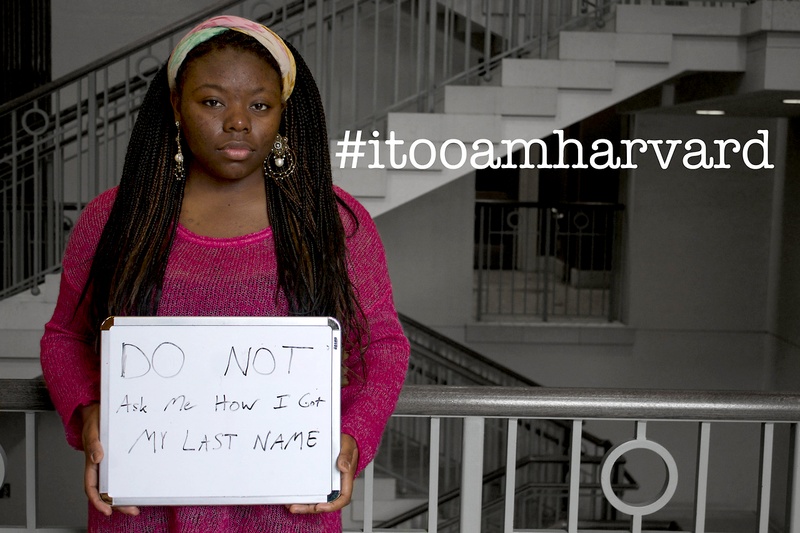
Keyanna Y. Wigglesworth ’16 is one of those students. “This is a problem that is pervasive in this college: this sense of alienation, of isolation, of not feeling like you belong,” she says.
 COURTESY OF CAROL POWELL
Co-director of Harvard Dialogues, formerly known as Sustained Dialogue, Wigglesworth focuses her extracurricular work on promoting active conversations around various forms of identity and power on campus. And personally, she says, race is a subject that hits home—and often hurts.
Wigglesworth cites personal experience of having her legitimacy as a student doubted: in several cases, she says, her ID has been checked by staff explicitly questioning her status at the College. She says she feels this is directly related to her identity as a black student.
“You can’t tell me that racial profiling is not something that black students have to go through on this campus,” Wigglesworth says.
The issue of racial profiling has long affected social life at the College. In 2007, HUPD officers asked a group of Black Men’s Forum and Association of Black Harvard Women members enjoying a yearly gathering on the Quad to offer proof of identification. The officers had been called by students who questioned whether the picnickers went to Harvard. Many at the time thought this doubt was racialized; Wigglesworth, at least, thinks similar dynamics persist.
The Quad was home to a disproportionate number of black students under the old ranked-choice housing system, abolished to increase House diversity in 1995.
Farai Chideya ’90, a journalist who wrote a Washington Post response to I, Too, Am Harvard about her own experience of race at the College, says that this concentration of black students prompted accusations of self-segregation—a charge that affects student social life to this day.
“A lot of black students ended up living in the Quad. Some people call that self-segregation, but I don’t like that term at all,” Chideya says. This kind of social grouping by race, she argues, is often an effect of discrimination. “When you go through those kinds of things, you might say, well, I just don’t really trust that I’m going to be in a majority culture and be treated with respect.”
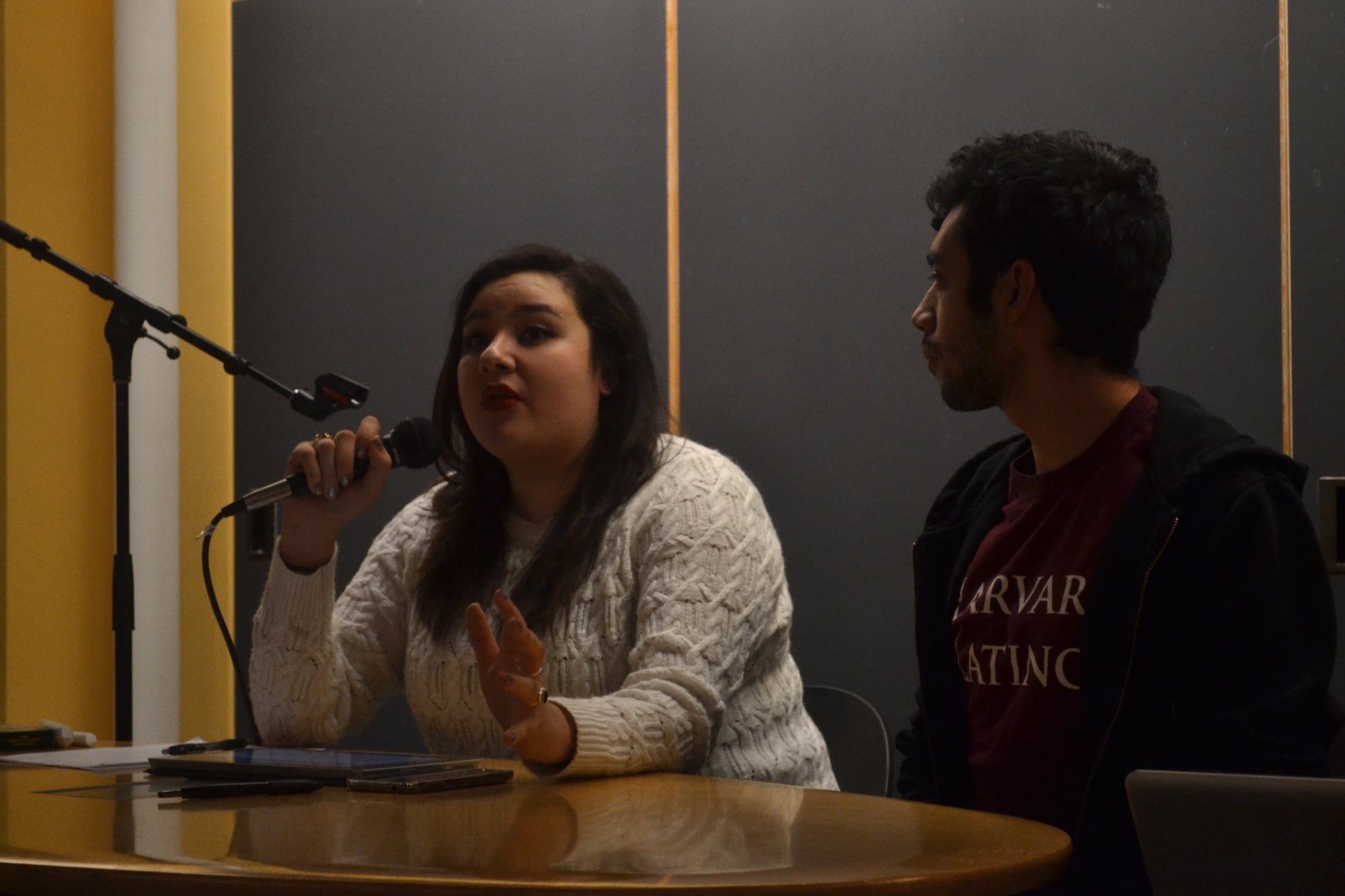
Rodriguez S. Roberts ’15, [/QUOTE]Comment
-
The 10 page article in which Black students at Harvard share there experiences starts here:
Anyway if you were looking for Harvard to built your case for "this is a non-issue everything in the garden is fine", you picked the wrong school. The issues are well documented and have been for some time. IF your daughter really goes to Harvard, she would be aware of these dynamics and issues that have received widespread and recent press coverage.....globally.Last edited by Tropicana; 06-01-2014, 10:55 AM.Comment
-
Originally posted by twiney View Post
O LAWD dis is classic and de best awgument a de whole chredd. Smaddy a ansah certain tings an it nuh mek no sense caz dem cyaan follow (self inflicted) de whole awgument.
What a ting dis really mek mi DWL dis mawnin

Comment
-
u know one reason Jamaica got so good at sprinting ????
Lewis made the same comment as Prof Gates made about Non Yanki Harvard students going to university... as Lewis made about Non Yanki college sprinters... Saying they needed to have more scholarships to black Yankis...So much for unity of purpose...
It strikes me that there are two separate issues
There is a fall in the proportion of Black Yankis going to Harvard; there is an increase in the number of non natives students going to Harvard..There also has been a fall in Anglos
The second issue is that there is an issue of cultural difference between non native Africans to the first generation and African Americans...
How do Jamaican students interact with Asian Americans as welll as non native asian particular chinese who are in the ascendancy in Ivy League universities.. ( i listened to a program about Chinese Students at Harvard on the 25 years since Tienanmen Square).. How do Jamaicans interact with Africans ? How do Jamaicans interact with Mexican Americans ?
My understanding is that Asian Students dont participate verbally in class.... given that... And given that i have run a couple of short technical courses in Asia and the middle east it is difficult to get alot of people to ask and query. there are cultural drivers that prevent this participation.....
Personally i think we need Dr Dudd who went to Harvard..
As for the the comment doubt whether Franksters daughter goes to an ivy league university... that is just jealousy.....and red eye bizness!Last edited by Wahalla; 06-02-2014, 08:17 AM.Comment
-
I've been watching this thread, trying to learn something...For what it's worth, I would have to agree with that statement."To white observers, black immigrants seem more polite, less hostile, more solicitous, and 'easier to get along with,'" the study said. "Native blacks are perceived in precisely the opposite fashion."Comment
-
So true...O LAWD dis is classic and de best awgument a de whole chredd. Smaddy a ansah certain tings an it nuh mek no sense caz dem cyaan follow (self inflicted) de whole awgument.
What a ting dis really mek mi DWL dis mawninComment
-
Originally posted by Tropicana View Post
Look it seems you are confused, this thread is about Native black american vis avis immigrants who are from the Caribbean........now if you want to discuss black /white racism start a fresh thread - see you there
Comment
-
No YOU took it in this direction when you said your daughter claimed that people of ALL races and background come to the events the Black Students Union puts on.
Originally posted by franksterr View PostOriginally posted by franksterr View Post
YOU are the one who brought people other than immigrants into this discussion and when I posted NUFF evidence to show you didn't know what you were talking about you suddenly don't want to discuss that anymore.
Next time you make a claim, make sure it isn't something that can easily be proven incorrect.Last edited by Tropicana; 06-02-2014, 06:35 PM.Comment
-
Okay maybe you do not know but in the Caribbean you have White Indian And Chinese all claiming various Caribbean Nationalities.......Now they have they same nationality but they are of different Races - understandOriginally posted by Tropicana View Post

Comment


 I wonder why...

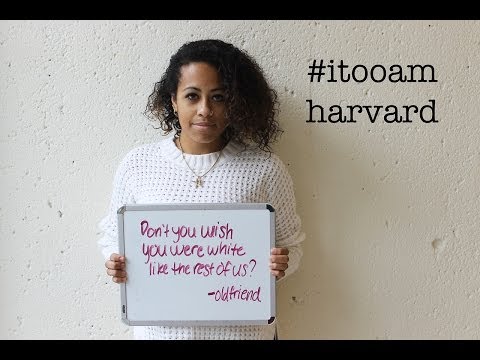


 Originally Posted by Tropicana


Comment