

 Tweet
Tweet
To Ignore Race is to Ignore the Consequences of Racism

Talking about race is challenging for many parents, especially White parents.
There is a lot of fear and uncertainty about this topic – from worrying that by pointing out race we are contributing to racism, to believing that by ignoring race we are creating a “color-blind” and therefore more equal world; some simply don’t know how or where to start.
And we need to get over it.
As discussed in part one of this article, remaining silent on the topic of race isn’t helping our children, and it isn’t moving the needle any closer to equality. In fact, science shows that it may be doing the exact opposite.
Children experience race. They need our help to understand and contextualize it, to understand what it means, how it is used and misused, and how America’s current and historical racial constructs either benefit or harm them and their friends.
I think most parents have similar goals when it comes to how they want to raise their children to handle issues of race.
First, we want to raise children who judge and assess the individuals they meet based on behavior, likes and dislikes, commonalities, and values – not the color of their skin or the origin of their recent ancestors.
Second, we want to raise children who understand that their ability and willingness to see people as people is not universal. We want to raise them to see and to call out racism and bigotry in the world around them. We want them to refuse to accept it or give it a pass.
Last, we want to raise children who understand the difference between being a supportive ally and being a White Knight, and to see people not as others who need saving, but as equals who need friendship.
It turns out the best way to meet these goals is to have honest, in depth, and specific conversations about race with the children in our care.
Race is a tricky thing in America, and educating our youth about it is a process, but there are a few things everyone can do to make it better.
1. Recognize that children experience race and that they need help to understand and contextualize it.
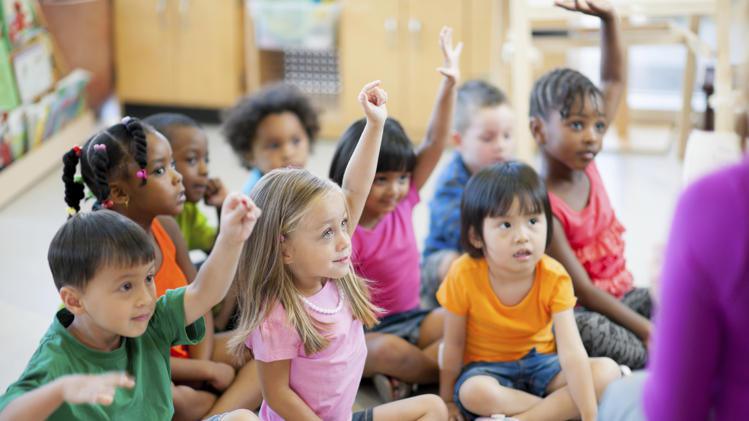

Kids Learn from what you do....... not what you say or don't say.
Americans largely believe in equality, but from policing to the publishing, there is a clear pattern of discrimination against black people. How does that happen?
The Perception Institute argues that part of the answer, at least, is that people's perceptions don't always square with their ideals: While the ideals may be egalitarian, the perceptions are often racist, or can lead to racist outcomes. People may have implicit bias, involving unconscious stereotypes and reactions—biases which, research shows, can increase the speed (and likelihood) with which a white person may shoot a black person, or may affect who is and is not called back in for job interviews.
White anxieties here may seem trivial. Black people are being shot and imprisoned and targeted for violence, and we should spend time worrying about whether white people feel good about themselves? But the report explains that white anxieties are important, precisely because they contribute to these systemic racist outcomes. White teachers who are anxious about appearing racist may be afraid to give students of color critical feedback, setting them up for failure. Doctors who are anxious about racial interactions may cut visits with black patients or patients of color short, which can (and does) result in lower quality health care. In addition, racial anxieties tend to compound further racial anxieties. "A negative experience with someone of another race or ethnicity can trigger a negative feedback loop where the experience of racial anxiety predicts fewer and lower-quality interactions with other racial and ethnic groups in the future."
http://www.psmag.com/books-and-cultu...terature-95094

by Carmen Nobel
In trying to prevent discrimination and prejudice, many companies adopt a strategy of "colorblindness"—actively trying to ignore racial differences when enacting policies and making organizational decisions. The logic is simple: if we don't even notice race, then we can't act in a racist manner.
The problem is that most of us naturally do notice each other's racial differences, regardless of our employer's policy.
Several studies by Norton and his colleagues show that attempting to overcome prejudice by ignoring race is an ineffective strategy that—in many cases—only serves to perpetuate bias. In short, bending over backward to ignore race can exacerbate rather than solve issues of race in the workplace.
"UMM, HE HAS PANTS"
In efforts to be politically correct, people often avoid mentioning race when describing a person, even if that person's race is the most obvious descriptor. (Comedian Stephen Colbert often pokes fun of this tendencyon his TV show, The Colbert Report, claiming that he doesn't "see color.") If a manager, for example, is asked which guy Fred is, he or she may be loath to say, "Fred's Asian," even if Fred is the only Asian person in the company.
"Instead, it's, 'He's that nice man who works in operations, and, umm, he has hair, and, umm, he has pants,' " Norton says. "And it keeps going on until finally someone comes out and asks, 'Oh, is he Asian?'"
Talking about race is challenging for many parents, especially White parents.
There is a lot of fear and uncertainty about this topic – from worrying that by pointing out race we are contributing to racism, to believing that by ignoring race we are creating a “color-blind” and therefore more equal world; some simply don’t know how or where to start.
And we need to get over it.
As discussed in part one of this article, remaining silent on the topic of race isn’t helping our children, and it isn’t moving the needle any closer to equality. In fact, science shows that it may be doing the exact opposite.
Children experience race. They need our help to understand and contextualize it, to understand what it means, how it is used and misused, and how America’s current and historical racial constructs either benefit or harm them and their friends.
I think most parents have similar goals when it comes to how they want to raise their children to handle issues of race.
First, we want to raise children who judge and assess the individuals they meet based on behavior, likes and dislikes, commonalities, and values – not the color of their skin or the origin of their recent ancestors.
Second, we want to raise children who understand that their ability and willingness to see people as people is not universal. We want to raise them to see and to call out racism and bigotry in the world around them. We want them to refuse to accept it or give it a pass.
Last, we want to raise children who understand the difference between being a supportive ally and being a White Knight, and to see people not as others who need saving, but as equals who need friendship.
It turns out the best way to meet these goals is to have honest, in depth, and specific conversations about race with the children in our care.
Race is a tricky thing in America, and educating our youth about it is a process, but there are a few things everyone can do to make it better.
1. Recognize that children experience race and that they need help to understand and contextualize it.
Kids Learn from what you do....... not what you say or don't say.
Americans largely believe in equality, but from policing to the publishing, there is a clear pattern of discrimination against black people. How does that happen?
The Perception Institute argues that part of the answer, at least, is that people's perceptions don't always square with their ideals: While the ideals may be egalitarian, the perceptions are often racist, or can lead to racist outcomes. People may have implicit bias, involving unconscious stereotypes and reactions—biases which, research shows, can increase the speed (and likelihood) with which a white person may shoot a black person, or may affect who is and is not called back in for job interviews.
Implicit bias is a relatively common concept. But the report also discusses other kinds of racial dynamics which can cause discriminatory outcomes. For example, both blacks and whites can experience racial anxiety—that is, they may be uncomfortable in situations involving interracial interactions. People of color may be worried that they will be targeted for discrimination (for good reason), and whites may be anxious that they will be seen as racist.
White anxieties here may seem trivial. Black people are being shot and imprisoned and targeted for violence, and we should spend time worrying about whether white people feel good about themselves? But the report explains that white anxieties are important, precisely because they contribute to these systemic racist outcomes. White teachers who are anxious about appearing racist may be afraid to give students of color critical feedback, setting them up for failure. Doctors who are anxious about racial interactions may cut visits with black patients or patients of color short, which can (and does) result in lower quality health care. In addition, racial anxieties tend to compound further racial anxieties. "A negative experience with someone of another race or ethnicity can trigger a negative feedback loop where the experience of racial anxiety predicts fewer and lower-quality interactions with other racial and ethnic groups in the future."
http://www.psmag.com/books-and-cultu...terature-95094
by Carmen Nobel
In trying to prevent discrimination and prejudice, many companies adopt a strategy of "colorblindness"—actively trying to ignore racial differences when enacting policies and making organizational decisions. The logic is simple: if we don't even notice race, then we can't act in a racist manner.
The problem is that most of us naturally do notice each other's racial differences, regardless of our employer's policy.
“VERY EARLY ON KIDS GET THE MESSAGE THAT THEY ARE NOT SUPPOSED TO ACKNOWLEDGE THAT THEY NOTICE PEOPLE’S RACE—OFTEN THE RESULT OF A HORRIFIED REACTION FROM A PARENT WHEN THEY DO.”
"It's so appealing on the surface to think that the best way to approach race is to pretend that it doesn't exist," says behavioral psychologist Michael I. Norton, an associate professor at Harvard Business School. "But research shows that it simply doesn't work. We do notice race, and there's no way of getting around this fact."Several studies by Norton and his colleagues show that attempting to overcome prejudice by ignoring race is an ineffective strategy that—in many cases—only serves to perpetuate bias. In short, bending over backward to ignore race can exacerbate rather than solve issues of race in the workplace.
"UMM, HE HAS PANTS"
In efforts to be politically correct, people often avoid mentioning race when describing a person, even if that person's race is the most obvious descriptor. (Comedian Stephen Colbert often pokes fun of this tendencyon his TV show, The Colbert Report, claiming that he doesn't "see color.") If a manager, for example, is asked which guy Fred is, he or she may be loath to say, "Fred's Asian," even if Fred is the only Asian person in the company.
"Instead, it's, 'He's that nice man who works in operations, and, umm, he has hair, and, umm, he has pants,' " Norton says. "And it keeps going on until finally someone comes out and asks, 'Oh, is he Asian?'"
