

 Tweet
Tweet
Is there anyone here who thinks Affirmative Action is Racist?

In an attempt to prove that affirmative action is one of modern America’s greatest “racist” atrocities, Mindy Kaling’s older brother did more than just embarrass himself with a poorly constructed experiment. His idea to pose as a Black man to more easily get accepted into universities actually added another anecdote to the already bursting file cabinet of reasons why affirmative action is absolutely necessary.
So here is a story you don’t see every day. In the country where Black men are getting racially profiled, gunned down, locked up at unbelievable rates and constantly being targeted by every racist institution that serves as America’s economic support beams, actress Mindy Kaling’s brother actually wanted to pretend to be a Black man.
So he did.
Vijay Chokalingam believed that with a GPA of 3.1 and an MCAT score of 31, his chances of getting accepted into the medical school of his choice were nearly nonexistent.
“Still, I was determined to become a doctor and I knew that admission standards for certain minorities under affirmative action were, let’s say…less stringent,” he writes in a forthcoming book titled Almost Black.
So that’s when he concocted a scheme to pose as a Black man in hopes that affirmative action would give him a better chance of getting into universities like Harvard and the University of Pennsylvania.
He chopped off his hair, trimmed his long eyelashes and started going by his childhood moniker of Jojo.
He even joined African-American organizations. According to his story, his own fraternity brothers failed to recognize him after the transformation.
Once he submitted his applications as a Black student, he claims he was a contender at schools including Harvard, Washington University in St. Louis, the University of Pennsylvania, Case Western and Columbia.
According to Chokalingam, an acceptance letter from St. Louis University served as undeniable proof that affirmative action was nothing but a racist ploy that allowed Black students to get into colleges they didn’t work hard enough to attend.
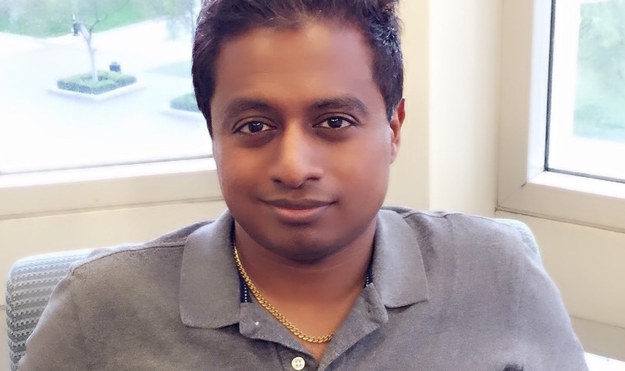

Nobay, 30, who filed his lawsuit after moving to New Haven in 1992 to work on a post-graduate degree at Yale University's School of Public Health, accused his professional adviser at Princeton of defaming him.
Yet, he admitted Monday and Tuesday under cross-examination that he was guilty of many exaggerations, mistakes and outright falsehoods as he sought admission to Princeton and then to medical school.
The Princeton adviser, Jane Y. Sharaf, initiated a thorough review of Nobay's record in 1990 after noticing that he described himself as a black student on his medical school applications. Nobay was accepted to Vanderbilt University in 1991, but it rescinded the offer after being contacted by Sharaf.
Nobay sought admission to medical school again in 1994 after post-graduate studies at Yale, again describing himself as a black student.
Officials at Princeton, including some who wrote recommendations for Nobay, had thought his parents were from the Indian subcontinent of Asia. Nobay, however, had described himself as a black student on his Princeton application.
``You look Indian to me,'' said his own attorney, Norman A. Pattis.``Do you consider yourself of Africa?''
Nobay replied that his parents are Kenyans, whose ancestors were from the Portuguese colony of Goa, now part of India. He said his racial background was a mix of Portuguese, Arabic and black African, and he estimated he is one-quarter to one-eighth black.
``None of the other ethnic designations ever worked for me,'' Nobay said.
He was born in New York while his parents were graduate students at Columbia University. He lived in Kenya until he was 5, when his father took a banking job in the United States, and was raised in Los Angeles.
In personal statements and autobiographies he wrote to support college applications, Nobay wrote of growing up in a backward village, yearning to learn Western medicine so he could return to the Third World.
Even the lepers in his village supported his dream, sharing what they earned from begging, he wrote. Princeton's attorney, Frank J. Silvestri, found that hard to believe.
``Is that true,'' he asked on cross-examination, ``a family of lepers gave half their beggings to you?''
``That was an overstatement,'' Nobay replied.


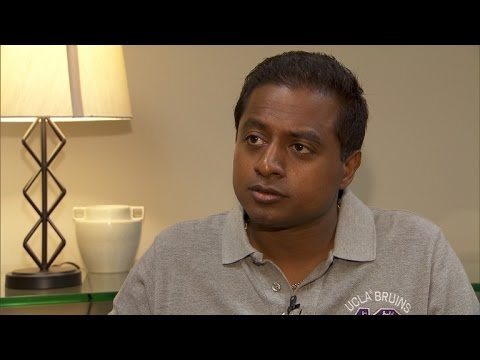
In an attempt to prove that affirmative action is one of modern America’s greatest “racist” atrocities, Mindy Kaling’s older brother did more than just embarrass himself with a poorly constructed experiment. His idea to pose as a Black man to more easily get accepted into universities actually added another anecdote to the already bursting file cabinet of reasons why affirmative action is absolutely necessary.
So here is a story you don’t see every day. In the country where Black men are getting racially profiled, gunned down, locked up at unbelievable rates and constantly being targeted by every racist institution that serves as America’s economic support beams, actress Mindy Kaling’s brother actually wanted to pretend to be a Black man.
So he did.
Vijay Chokalingam believed that with a GPA of 3.1 and an MCAT score of 31, his chances of getting accepted into the medical school of his choice were nearly nonexistent.
“Still, I was determined to become a doctor and I knew that admission standards for certain minorities under affirmative action were, let’s say…less stringent,” he writes in a forthcoming book titled Almost Black.
So that’s when he concocted a scheme to pose as a Black man in hopes that affirmative action would give him a better chance of getting into universities like Harvard and the University of Pennsylvania.
He chopped off his hair, trimmed his long eyelashes and started going by his childhood moniker of Jojo.
He even joined African-American organizations. According to his story, his own fraternity brothers failed to recognize him after the transformation.
Once he submitted his applications as a Black student, he claims he was a contender at schools including Harvard, Washington University in St. Louis, the University of Pennsylvania, Case Western and Columbia.
According to Chokalingam, an acceptance letter from St. Louis University served as undeniable proof that affirmative action was nothing but a racist ploy that allowed Black students to get into colleges they didn’t work hard enough to attend.
Nobay, 30, who filed his lawsuit after moving to New Haven in 1992 to work on a post-graduate degree at Yale University's School of Public Health, accused his professional adviser at Princeton of defaming him.
Yet, he admitted Monday and Tuesday under cross-examination that he was guilty of many exaggerations, mistakes and outright falsehoods as he sought admission to Princeton and then to medical school.
The Princeton adviser, Jane Y. Sharaf, initiated a thorough review of Nobay's record in 1990 after noticing that he described himself as a black student on his medical school applications. Nobay was accepted to Vanderbilt University in 1991, but it rescinded the offer after being contacted by Sharaf.
Nobay sought admission to medical school again in 1994 after post-graduate studies at Yale, again describing himself as a black student.
Officials at Princeton, including some who wrote recommendations for Nobay, had thought his parents were from the Indian subcontinent of Asia. Nobay, however, had described himself as a black student on his Princeton application.
``You look Indian to me,'' said his own attorney, Norman A. Pattis.``Do you consider yourself of Africa?''
Nobay replied that his parents are Kenyans, whose ancestors were from the Portuguese colony of Goa, now part of India. He said his racial background was a mix of Portuguese, Arabic and black African, and he estimated he is one-quarter to one-eighth black.
``None of the other ethnic designations ever worked for me,'' Nobay said.
He was born in New York while his parents were graduate students at Columbia University. He lived in Kenya until he was 5, when his father took a banking job in the United States, and was raised in Los Angeles.
In personal statements and autobiographies he wrote to support college applications, Nobay wrote of growing up in a backward village, yearning to learn Western medicine so he could return to the Third World.
Even the lepers in his village supported his dream, sharing what they earned from begging, he wrote. Princeton's attorney, Frank J. Silvestri, found that hard to believe.
``Is that true,'' he asked on cross-examination, ``a family of lepers gave half their beggings to you?''
``That was an overstatement,'' Nobay replied.

Comment