

 Tweet
Tweet
When you enter a room do you count how many people of your race is in there?
Feeling Entitled
Whites feel discriminated against in....Scholarship grants - Reverse Racism
Skin color affects your experience.
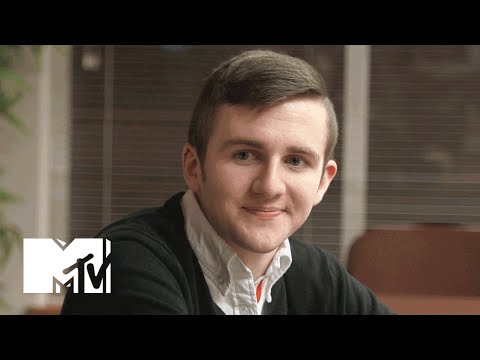
Last night, MTV premiered a documentary from its inhouse “Look Different” campaign and nonprofit Define American called, provocatively, “White People.” The film, just an hour long, is hosted by Jose Antonio Vargas, a Pulitzer Prize-winning journalist who is himself not white—he is Filipino-American, as he explains in the first few minutes. His mission with “White People” is to understand whiteness—and though many of his subjects laugh when he asks them about their white experience, the premise is entirely earnest. Vargas is an engaged, compassionate listener. He visits and holds workshops with students in Bellingham, Washington, Rapid City, South Dakota, and Winston-Salem, North Carolina; he discusses culture clash in Bensonhurst and college scholarships at Grand Canyon State University. And throughout he encourages his participants of all races to be as honest as possible; to not worry about giving offense, or sparing anyone’s feelings.
The participants may have felt comfortable to do that. “White People” itself does not, though. There’s something elegant about the MTV documentary’s restraint; in its focus on young people and on open conversation, it sketches out an idea of how race relations might progressively improve. But it is an ultimately very well-produced after-school special—important and honest, yes, but unlikely to meaningfully reach its target audience. Vargas is trying to draw out a strain of white resentment usually only voiced by anonymous commenters, right-wing ideologues, and mass murderers—that of the dominant racial identity in America losing its privilege, and therefore, in some ways, its identity.
But while it can, at times, bring out moments of authentic expression from white individuals who feel they are being marginalized or discriminated against, that resentment still largely stays underground. “White People” is neither an apologia nor a close examination of white privilege; it kind of hovers in the middle, willing to be critical, but only when everyone’s feelings are least likely to be hurt
www.salon.com/2015/07/23/white_people_probably_wont_change_anyones_mind_on_ race_identity_and_what_it_means_to_be_white/
Feeling Entitled
Whites feel discriminated against in....Scholarship grants - Reverse Racism
Skin color affects your experience.
Last night, MTV premiered a documentary from its inhouse “Look Different” campaign and nonprofit Define American called, provocatively, “White People.” The film, just an hour long, is hosted by Jose Antonio Vargas, a Pulitzer Prize-winning journalist who is himself not white—he is Filipino-American, as he explains in the first few minutes. His mission with “White People” is to understand whiteness—and though many of his subjects laugh when he asks them about their white experience, the premise is entirely earnest. Vargas is an engaged, compassionate listener. He visits and holds workshops with students in Bellingham, Washington, Rapid City, South Dakota, and Winston-Salem, North Carolina; he discusses culture clash in Bensonhurst and college scholarships at Grand Canyon State University. And throughout he encourages his participants of all races to be as honest as possible; to not worry about giving offense, or sparing anyone’s feelings.
The participants may have felt comfortable to do that. “White People” itself does not, though. There’s something elegant about the MTV documentary’s restraint; in its focus on young people and on open conversation, it sketches out an idea of how race relations might progressively improve. But it is an ultimately very well-produced after-school special—important and honest, yes, but unlikely to meaningfully reach its target audience. Vargas is trying to draw out a strain of white resentment usually only voiced by anonymous commenters, right-wing ideologues, and mass murderers—that of the dominant racial identity in America losing its privilege, and therefore, in some ways, its identity.
But while it can, at times, bring out moments of authentic expression from white individuals who feel they are being marginalized or discriminated against, that resentment still largely stays underground. “White People” is neither an apologia nor a close examination of white privilege; it kind of hovers in the middle, willing to be critical, but only when everyone’s feelings are least likely to be hurt
www.salon.com/2015/07/23/white_people_probably_wont_change_anyones_mind_on_ race_identity_and_what_it_means_to_be_white/

Comment