

 Tweet
Tweet
Amsterdam's cannabis-selling coffee shops face crackdown
By Stanley Pignal
Friday, October 8, 2010
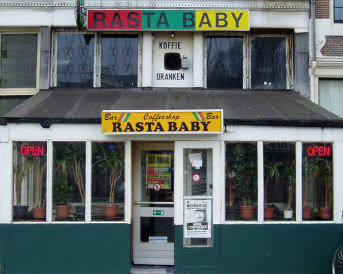
Coffee shops legally selling cannabis have been a feature of Amsterdam's streets for more than 30 years, a magnet for younger tourists and a symbol of the Dutch brand of liberal exceptionalism.
But the fragrant haze found in the city's 200 or so establishments could be dispersed under plans by the incoming government, which is looking to roll back the "tolerance policy" that has allowed such shops to operate since 1976.
Coinciding with a tightening of laws regarding prostitution - another tolerated industry - the authorities' new stance on cannabis is raising questions about whether Dutch society is moving away from laissez-faire traditions, which have included some of the earliest gay-friendly policies in Europe and the provision of free contraception to teenage girls.
Certainly the outlook for coffee shops is bleak. Among the few policies that the three parties in the new coalition government agree on is the need to reduce their numbers. The governing agreement released last week laid out plans that will force them to become members-only clubs and shut down those shops located near schools. The coalition is also advancing the idea of prohibiting the sale of cannabis to non-Dutch residents, which amounts to a death knell for many coffee shops.
The stricter stance comes after years of gradual tightening of rules governing cannabis sales and a 2007 ban on the selling of alcohol in coffee shops. Although the shops proliferated in the 1980s and early 1990s, their numbers have dropped by half in the past 15 years, from around 1,400 in 1995 to about 700 today.
"For sure, if the reforms go through it will impact business," said Maciej Truszkowski, owner of the Seville, a small, dimly lit coffee shop just off a canal. There are no displays of hemp leaves or any other sign that cannabis is for sale, in line with strict advertising rules, though multiple portraits of Bob Marley hint at the core business. Truszkowski said that if he cannot sell cannabis to foreigners, someone else will.
On a quiet weekday at lunchtime recently, a couple of locals walked in and asked for a cannabis menu. But British and American students made up most of the clientele. Truszkowski said foreigners provide half his business, a figure he thinks is much higher for coffee shops nearer Amsterdam's red-light district, a 10-minute walk away.
Rules governing the sex industry have been tightened and measures put forth to halve the size of the red-light district. For Paul Schnabel, director of the Social and Cultural Planning Office, a government advisory board, the move reflects a growing view that the tolerance policies have not controlled the ills associated with drugs and prostitution, rather than a recasting of Dutch liberalism.
The circumstances that led to the tolerance policies have changed in the past decade, as large-scale crime around coffee shops and the legal sex trade became more visible. In particular, the absence of legal means for coffee shops to obtain cannabis has highlighted their association with organized crime.
But the open-minded instincts that helped foster the policies are also being questioned. And it is not just the far-right opposing coffee shops. The traditional parties of power on the center-right, the Christian Democrats and the Liberal VVD, have also moved against the policies they once promoted.
"The liberal consensus that helped create those policies - that's gone now. The pragmatism has been replaced by increasingly moral politics, in a way which is reminiscent of what happened in the United States with the 'moral majority' in the 1980s," said Andre Krouwel, a political scientist at the Free University in Amsterdam.
© The Financial Times Ltd 2010. FT and 'Financial Times' are trademarks of The Financial Times Ltd.
By Stanley Pignal
Friday, October 8, 2010
Coffee shops legally selling cannabis have been a feature of Amsterdam's streets for more than 30 years, a magnet for younger tourists and a symbol of the Dutch brand of liberal exceptionalism.
But the fragrant haze found in the city's 200 or so establishments could be dispersed under plans by the incoming government, which is looking to roll back the "tolerance policy" that has allowed such shops to operate since 1976.
Coinciding with a tightening of laws regarding prostitution - another tolerated industry - the authorities' new stance on cannabis is raising questions about whether Dutch society is moving away from laissez-faire traditions, which have included some of the earliest gay-friendly policies in Europe and the provision of free contraception to teenage girls.
Certainly the outlook for coffee shops is bleak. Among the few policies that the three parties in the new coalition government agree on is the need to reduce their numbers. The governing agreement released last week laid out plans that will force them to become members-only clubs and shut down those shops located near schools. The coalition is also advancing the idea of prohibiting the sale of cannabis to non-Dutch residents, which amounts to a death knell for many coffee shops.
The stricter stance comes after years of gradual tightening of rules governing cannabis sales and a 2007 ban on the selling of alcohol in coffee shops. Although the shops proliferated in the 1980s and early 1990s, their numbers have dropped by half in the past 15 years, from around 1,400 in 1995 to about 700 today.
"For sure, if the reforms go through it will impact business," said Maciej Truszkowski, owner of the Seville, a small, dimly lit coffee shop just off a canal. There are no displays of hemp leaves or any other sign that cannabis is for sale, in line with strict advertising rules, though multiple portraits of Bob Marley hint at the core business. Truszkowski said that if he cannot sell cannabis to foreigners, someone else will.
On a quiet weekday at lunchtime recently, a couple of locals walked in and asked for a cannabis menu. But British and American students made up most of the clientele. Truszkowski said foreigners provide half his business, a figure he thinks is much higher for coffee shops nearer Amsterdam's red-light district, a 10-minute walk away.
Rules governing the sex industry have been tightened and measures put forth to halve the size of the red-light district. For Paul Schnabel, director of the Social and Cultural Planning Office, a government advisory board, the move reflects a growing view that the tolerance policies have not controlled the ills associated with drugs and prostitution, rather than a recasting of Dutch liberalism.
The circumstances that led to the tolerance policies have changed in the past decade, as large-scale crime around coffee shops and the legal sex trade became more visible. In particular, the absence of legal means for coffee shops to obtain cannabis has highlighted their association with organized crime.
But the open-minded instincts that helped foster the policies are also being questioned. And it is not just the far-right opposing coffee shops. The traditional parties of power on the center-right, the Christian Democrats and the Liberal VVD, have also moved against the policies they once promoted.
"The liberal consensus that helped create those policies - that's gone now. The pragmatism has been replaced by increasingly moral politics, in a way which is reminiscent of what happened in the United States with the 'moral majority' in the 1980s," said Andre Krouwel, a political scientist at the Free University in Amsterdam.
© The Financial Times Ltd 2010. FT and 'Financial Times' are trademarks of The Financial Times Ltd.




 (live nearby, cycle past daily)

Comment