Tweet
Tweet
<span style="font-size: 14pt">Salvage resumes on New Zealand shipwreck</span>
Sapa-dpa | 18 January, 2012 08:45

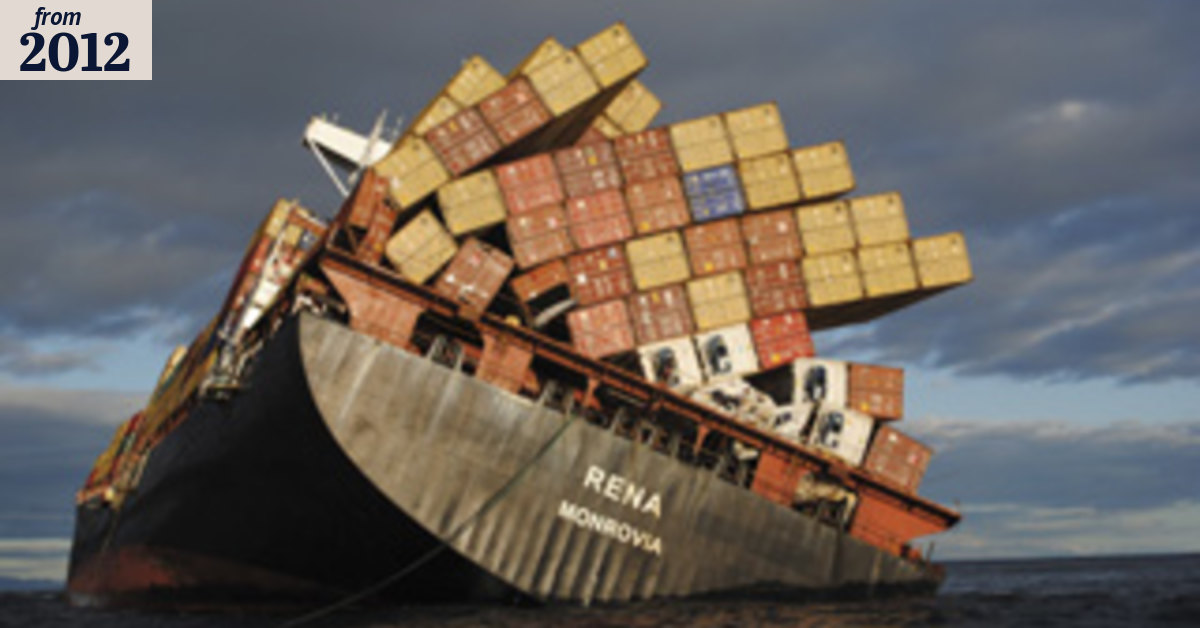
Vessels involved in container recovery manoeuvre near the remains of the container ship Rena on Astrolabe Reef, about 14 nautical miles (22 km) from Tauranga, on the east coast of New Zealand's North Island.
Image by: HANDOUT / REUTERS
The removal of containers from a ship stuck on a New Zealand reef resumed 10 days after it broke apart in a storm, officials say.
Maritime Safety New Zealand said the sea around the freighter Rena was calm enough to attempt to remove the remaining containers.
Prior to it breaking apart, 397 containers had been removed.
Officials said many of the 500 containers listed as “unlocated” could still be on parts of the boat currently too dangerous to enter.
Several containers have been found washed up onshore or sunk in the sea surrounding the wreck.
Thousands of kilograms of debris have been collected from the coast near Tauranga on North Island in recent days including milk bags, plastic and meat.
More than 2,000 seabirds died when the ship spilled about 360 tons of oil after running aground as it headed to port of Tauranga on October 5.
Oil spill response teams were dealing with light oil spills at nearby islands and beaches.
Sapa-dpa | 18 January, 2012 08:45
Vessels involved in container recovery manoeuvre near the remains of the container ship Rena on Astrolabe Reef, about 14 nautical miles (22 km) from Tauranga, on the east coast of New Zealand's North Island.
Image by: HANDOUT / REUTERS
The removal of containers from a ship stuck on a New Zealand reef resumed 10 days after it broke apart in a storm, officials say.
Maritime Safety New Zealand said the sea around the freighter Rena was calm enough to attempt to remove the remaining containers.
Prior to it breaking apart, 397 containers had been removed.
Officials said many of the 500 containers listed as “unlocated” could still be on parts of the boat currently too dangerous to enter.
Several containers have been found washed up onshore or sunk in the sea surrounding the wreck.
Thousands of kilograms of debris have been collected from the coast near Tauranga on North Island in recent days including milk bags, plastic and meat.
More than 2,000 seabirds died when the ship spilled about 360 tons of oil after running aground as it headed to port of Tauranga on October 5.
Oil spill response teams were dealing with light oil spills at nearby islands and beaches.