

 Tweet
Tweet
Originally posted by RichD
View Post
-
richd tell yuh dat wan aff de main reason mii luv fe bunn fiyah pon christmas iss cah oww dem use christmas fe brainwashed yuths fe spend dem sweetee money so dat rich peeps can git richer at de xxpense aff likkle yuths. imagine dem poor yuths woo parents cyaan aford fe buy dem present. yuh shood see de look pon sum aff dem yuths wey nah gitt no presents. plus mii doan like santa mekkinn yuths feel guiltee iff dem doan spend dem money fe buy presents. -
America's White Jesus is a global export and false product. http://www.finalcall.com/artman/uplo...13_cvr_490.jpg .................................................. ..................................... FinalCall.com) - From the first time Christian children settle into Sunday school classrooms, an image of Jesus Christ is etched into their minds. In North America he is most often depicted as both taller than his disciples, lean, with long, flowing, light brown hair, fair skin and light-colored eyes. Familiar though this image may be, it is inherently flawed. A person with these features and physical bearing would have looked very different from everyone else in the region where Jesus lived and ministered. —Popular Mechanics Magazine, December 2002 *** “Now it doesn’t matter what color Jesus was. If Jesus were actually White, that’s fine. If he were. But he was not … Suppose Jesus looked like you (Black students). You don’t want him now?” —The Honorable Minister Louis Farrakhan at Alabama A&M, April 10, 2012Comment
-
Color struck: America's White Jesus is a global export and false product
By Wesley Muhammad, PhD.
What color was Jesus? Most American Christians—Black and White—would dismiss this question as both irrelevant and unanswerable as the Gospels fail to give us a physical description.
The irony is that most of these same Americans in their heart of hearts are pretty confident any way that they know what color Jesus was. They attend churches with images of a tall, long haired, full bearded White man depicted in stained glass windows or painted on walls, and they return home to the same depictions framed in their living room or illustrating their family Bibles.
Further compounding the irony is the fact that America actually has an obsession with the (presumed) color of Christ and has exported her White Americanized Savior around the world, as recently documented by Edward J. Blum and Paul Harvey in their book, The Color of Christ: The Son of God and the Saga of Race in America (2012).
In fact, the world’s most popular and recognizable image of Christ is a distinctly 19th-20th century American creation. It is true that versions of the “White Christ” appear in European art as early as the 4th century of the Christian era, but these images coexisted with other, nonwhite representations throughout European history. The popularity of the cult of the Black Madonna and Black Christ throughout Europe is evidence of the fact that the European ‘White Christs’ never acquired the authority and authenticity that the White Christ now has globally. This Christ and his authority are American phenomena. As a predominantly Protestant nation Early America rejected the imaging of Christ that characterized European Catholicism.
By the mid-19th century, however, in response to American expansion, splintering during the Civil War and subsequent reconstructing, “Whiteness” took on a new significance and a newly- empowered “White Jesus” rose to prominence as the sanctifying symbol of a new national unity and power. As Blum and Harvey observe:
“By wrapping itself with the alleged form of Jesus, whiteness gave itself a holy face … With Jesus as white, Americans could feel that sacred whiteness stretched back in time thousands of years and forward in sacred space to heaven and the second coming … The white Jesus promised a white past, a white present, and a future of white glory.”
As America rose to superpower status in the 20th century she became the world’s leading producer and global exporter of White Jesus imagery through film, art, American business, and Christian missions, and has thereby defined the world’s view of the Son of God. This globally recognizable Jesus is a totally American product. Indeed, he is an American. Warner Sallman’s iconic image of Jesus called Head of Christ (1941) became the most widely reproduced piece of artwork in world history and its depiction the most recognizable face of Jesus in the world. By the 1990s it had been printed over 500 million times and achieved global iconic status. With smooth white skin, long, flowing blondish-brown hair, long beard and blue eyes, this Nordic Christ consciously disguised any hint of Jesus’s Semitic, oriental origin—and departed from the older European depictions. It both shaped and was shaped by emerging American ideas of whiteness. The beloved White Jesus of today’s world was Made in America.
What, then, did Jesus actually look like? Despite the absence of a detailed description of Jesus’s physical appearance in the Gospels (though John the Revelator saw the risen Christ apparently with wooly hair and black feet, Rev. 1:14-15), there are non-biblical evidences that actually allow us to visualize the Son of God from Nazareth.
The first century Jewish writer Josephus (37-100 AD) penned the earliest non-biblical testimony of Jesus. He reportedly had access to official Roman records on which he based his information and in his work Halosis or the “Capture (of Jerusalem),” written around 72 A.D., Josephus discussed “the human form of Jesus and his wonderful works.” Unfortunately his texts have passed through Christian hands which altered them, removing offensive material. Fortunately, however, Biblical scholar Robert Eisler in a classic 1931 study of Josephus’ Testimony was able to reconstruct the unaltered testimony based on a newly-discovered Old Russian translation that preserved the original Greek text. According to Eisler’s reconstruction, the oldest non-Biblical description of Jesus read as follows:
“At that time also there appeared a certain man of magic power … if it be meet to call him a man, [whose name is Jesus], whom [certain] Greeks call a son of [a] God, but his disciples [call] the true prophet … he was a man of simple appearance, mature age, black-skinned (melagchrous), short growth, three cubits tall, hunchbacked, prognathous (lit. ‘with a long face’ [macroprosopos]), a long nose, eyebrows meeting above the nose … with scanty [curly] hair, but having a line in the middle of the head after the fashion of the Nazaraeans, with an undeveloped beard.”
This short, black-skinned, mature, hunchbacked Jesus with a unibrow, short curly hair and undeveloped beard bears no resemblance to the Jesus Christ taken for granted today by most of the Christian world: the tall, long haired, long bearded, white-skinned and blue eyed Son of God. Yet, this earliest textual record matches well the earliest iconographic evidence. The earliest visual depiction of Jesus is a painting found in 1921 on a wall of the baptismal chamber of the house-church at Dura Europos, Syria and dated around 235 A.D. The Jesus that is “Healing the Paralytic Man” (Mark 2:1-12) is short and dark-skinned with a small curly afro. This description has now been supported by the new science of forensic anthropology. In 2002 British forensic scientists and Israeli archaeologists reconstructed what they believe is the most accurate image of Jesus based off of data obtained from the multi-disciplinary approach. In December 2002 Popular Science Magazine published a cover story on the findings which confirm that Jesus would have been short, around 5”1’, hair “short with tight curls,” a weather-beaten face “which would have made him appear older,” dark eyes and complexion: “he probably looked a great deal more like a dark-skinned Semite than Westerners are used to seeing,” they concluded. The textual, visual, and scientific evidence agrees, then: Jesus likely was a short, dark-skinned Semite with short curly hair and dark eyes.
Colossians 1:15 describes Christ as the “image of the unseen God” and in the Gospel of John (12:45; 14:9) Jesus declares that whoever sees him has seen God. What Jesus “looks like” then is not irrelevant as it is in some way a pointer to God Himself.
Dr. Wesley Muhammad is an Historian of Religion
Last edited by blugiant; 12-25-2012, 11:53 AM.Comment
-
i agree wid you on dat 100%Originally posted by blugiant View PostWhen its hot in the jungle of peace I go swimming in the ocean of love.....Comment
-
On Christmas: What Would OUR Jesus Do?
By the NOI Research Group
In 1845, the great Black abolitionist and orator Frederick Douglass explained that these so-called holidays were “one of the grossest frauds committed upon the down-trodden slave.” He saw right through the false religious piety to the real economic motive of the celebrations: “I believe them to be among the most effective means in the hands of the slaveholder in keeping down the spirit of insurrection. These holidays serve as … safety-valves, to carry off the rebellious spirit of enslaved humanity.”
The Most Honorable Elijah Muhammad forthrightly challenged the Black man’s adoption of the White man’s holiday in his 1974 book Our Saviour Has Arrived, and no one has remarked more plainly on the hypocrisy of Christmas celebrants, who “pretend to love worshipping the prophet on the 25th day of December.”
“They stagger drunkenly all over the streets, campuses, and most of the homes and churches, with card games, dice and other games of chance and all kinds of whisky and beer—to celebrate that great prophet; with fighting and killing and eating swine flesh. Such is the day which they call the birthday of Jesus.”
But today Blacks ignore this sage advice and follow the commandments of Macy’s and Wal-Mart, Target and Toys ‘R’ Us and fall further and further into debt and credit card subjection. In fact, it seems that Black people walked off the plantation and into the department store. We went from standing on an auction block waiting to be sold to standing in the checkout line waiting to be fleeced.
Before the merchants cynically snatched Jesus from the Christians and exiled him to the North Pole, Blacks were at the forefront of truly celebrating Jesus’ life as a freedom fighter and revolutionary. Once upon a time our brothers and sisters suffering the physical chains of slavery had a different type of “yuletide” spirit.
And on Christmas, they asked themselves a question rarely asked in America: “On His birthday, what would Jesus do?” If He returned today would He be swiping a credit card, or, as the Scripture says, fighting for the freedom of all human beings.
On Christmas Day in 1701, fifteen Blacks on the tiny Caribbean Island of Antigua celebrated by rising up and giving the Caucasian sugar planter who enslaved them a present to remember: they hacked him to pieces—killed because of the manner he treated his female slaves. The dead Major Samuel Martin was also the Speaker of the Antiguan Assembly. Their rebellion was short-lived, however; they were overpowered by the island’s well-armed militia. And though their dreams of freedom were frustrated, their spirited yuletide example permeated the colonial Caribbean.
Our Jamaican brothers and sisters weren’t waiting for Santa either. In 1831, under the command of a Black “house slave” named Samuel Sharpe, they rose up against the White oppressors. A true believer in Jesus, our Baptist Brother Samuel used his insider position to secretly organize a peaceful Christmas strike among his fellow captives in order to win better working conditions. Word leaked out to the Whites, who violently responded, turning the peaceful action into a full-scale Christmas rebellion.
Sharpe’s forces grew steadily in number—some say to 40,000—and they traversed the island burning down nearly 160 large sugar plantations one by one. Within a week the rebels controlled the entire Western interior of Jamaica, including the mountainous regions. The rebels targeted property and not people, as shown by the fact that only 12 Whites were killed. But the British responded with both their militia and their navy, and they massacred more than 200 of the freedom-seeking Blacks. Three hundred more Africans were systematically executed in a horrifying manner, along with Bro. Samuel Sharpe. Now known in Jamaica as the 1831 Christmas Rebellion, it sent shockwaves through Britain, which ultimately decided to abolish slavery—not because of any awakened sympathy or morality, but because the Baptist Bro. Sharpe and his freedom-fighting rebel forces had made slavery too costly and thus unprofitable.
On Christmas of 1835, Africans and Seminoles launched the St. John Rebellion against the region’s sugar plantations.That mighty Black-Red alliance is the only authentic alliance Blacks have ever had in America. Photo: Courtesy Library of Congress
In 1492, Portuguese slave trader Christopher Columbus landed on Hispaniola (now Haiti and Dominican Republic), bringing with him slavery, disease, death, and destruction. He sailed off to his next indigenous victims but left his son Don Diego Colon in charge of the island, where he owned a major sugar plantation.
On Christmas day of 1521, twenty Africans of the Muslim Wolof people launched that island’s first slave rebellion. Taking advantage of the holiday lull, the Muslims gathered twenty more to their cause and tried to effect their escape. They killed and captured those who tried to stop them and burned plantations as they made their way. The Europeans quickly responded in force and in a few days the rebellion was thwarted. The rebels were hanged along the roadway, their dead bodies serving as a warning to other Africans.
But as the Qur’an says (Chapter 2, verse 154) of those who are slain in the way of Allah, do not speak of them as dead. Because from 1521 onward, plantation owners ended the importation of Muslims to the island. The strength and bravery of those Muslims in Hispaniola struck so much fear in the White man that their actions very likely saved untold numbers of Muslims back in Africa from becoming victims of the slave trade.
Much of what is under our Christmas trees is the result of handing over $20 bills etched with the portrait of President Andrew Jackson. But think over the irony of that holiday exchange. In the 1830s President Jackson was in a full-scale war with the Seminole Indians in the territory now known as Florida. Our Indian Brothers and Sisters provided a refuge for escaped Africans and Jackson intended to end that Black–Red Alliance. On Christmas of 1835, Africans and Seminoles launched the St. John Rebellion against the region’s sugar plantations. One Caucasian official sounded the alarm: “If a sufficient military force … is not sent … the whole frontier may be laid waste by a combination of the Indians, Indian negroes & the Negroes on the plantations—It is useless to mince this question.”
A Jewish soldier named Myer M. Cohen was a leader of the force sent to destroy the Seminoles and return the Africans to slavery. He reported that the freedom fighters were so rapid in their movements that within five days they had burned and destroyed several plantations, freeing 45 slaves from one; 180 from another; 80 and then 300 from the two others. The Seminole wars lasted for many years and ultimately succumbed to defeat.
That mighty Black–Red alliance is one of the only authentic alliances Blacks have ever had in America, and it is one sealed in blood.
Harriet Tubman was not waiting for Donner or Blitzen. On Christmas Day, 1854, she was in Dorchester County, Maryland, in secret assembly with seven enslaved Africans whose captor was considered “the worst man in the country.” Two of those were Sis. Harriet’s own blood brothers and she came to lead them out of bondage—she would eventually lead 300 Africans out of American slavery. Hundreds of miles they traveled, hiding in ditches and caves in the day, sneaking through forests and fording through streams in the night. She was ever watchful of the roving bands of Whites—called paddyrollers—who with their bloodhounds watched out for escapees and sought to earn the bounties the captured runaways would bring.
Frederick Douglass described his own escape from slavery: “At every gate through which we were to pass we saw a watchman, at every ferry a guard; on every bridge a sentinel and in every wood a patrol. We were hemmed in upon every side.”
But Harriet Tubman, even with a reward of $12,000 on her head (that’s $300,000 today!), kept asking herself, “What would Jesus do?” and she persevered Northward. The isolated network of houses of free Blacks that made up the Underground Railroad provided some respite, but the abhorrent Fugitive Slave Law deputized every White citizen—North and South—making them into legal slave catchers.
Ultimately, Sister Harriett and her companions crossed the bridge at Niagara Falls and made it into Canada, where the law gave Blacks a measure of freedom. Their Christmas song was true:
Glory to God and Jesus too,
One more soul is safe!
Oh, go and carry the news,
One more soul got safe!
Every year on Christmas—indeed, every single day—we must continue to ask ourselves that profound question, “On His birthday, What would OUR Jesus do?” Our Jesus is the Most Honorable Elijah Muhammad who taught that spending ourselves into debt to serve a false holiday will never be in our interest.
On every Christmas Day the Muslims must be found working hard to unite our people to pool our resources to build something for self, and educating and qualifying ourselves for independence. “Come follow me,” he said in Message to the Blackman, “and I will show you how to do this without having to shed a drop of blood. ... This chance can be had if you go about it in the right way.”Last edited by blugiant; 12-25-2012, 12:04 PM.Comment
-
EXCERPT FROM “NARRATIVE OF THE LIFE OF FREDERICK DOUGLAS”Originally posted by Emperah View Post

From what I know of the effect of these holidays upon the slave, I believe them to be among the most effective means in the hands of the slaveholder in keeping down the spirit of insurrection. Were the slaveholders at once to abandon this practice, I have not the slightest doubt it would lead to an immediate insurrection among the slaves. These holidays serve as conductors, or safety-valves, to carry off the rebellious spirit of enslaved humanity. But for these, the slave would be forced up to the wildest desperation; and woe betide the slaveholder, the day he ventures to remove or hinder the operation of those conductors! I warn him that, in such an event, a spirit will go forth in their midst, more to be dreaded than the most appalling earthquake.
The holidays are part and parcel of the gross fraud, wrong, and inhumanity of slavery. They are professedly a custom established by the benevolence of the slaveholders; but I undertake to say, it is the result of selfishness, and one of the grossest frauds committed upon the down-trodden slave. They do not give the slaves this time because they would not like to have their work during its continuance, but because they know it would be unsafe to deprive them of it. This will be seen by the fact that the slaveholders like to have their slaves spend those days just in such a manner as to make them as glad of their ending as of their beginning.
Their object seems to be, to disgust their slaves with freedom by plunging them into the lowest depths of dissipation. For instance, the slaveholders not only like to see the slave drink of his own accord, but will adopt various plans to make him drunk. One plan is to make bets on their slaves as to who can drink the most whisky without getting drunk; and in this way they succeed in getting whole multitudes to drink to excess.
Thus, when the slave asks for virtuous freedom, the cunning slaveholder knowing his ignorance, cheats him with a dose of vicious dissipation, artfully labeled with the name of liberty. The most of us used to drink it down, and the result was just what might be supposed; many of us were led to think that there was little to choose between liberty and slavery. We felt, and very properly too, that we had almost as well be slaves to man as to rum. So when the holidays ended, we staggered up from the filth of our wallowing, took a long breath, and marched to the field feeling upon the whole rather glad to go from what our master had deceived us into a belief was freedom, back to the arms of slavery.”
At the end of the 21st century the question will be asked WHY IS THE AFRICAN STILL A SLAVE, and the answer will be: HE DID NOT TAKE THE ISSUE OF CULTURAL RESISTANCE SERIOUSLY, and each succeeding generation of his children were carelessly allowed to fall into the snare of POPULAR CULTURE.
Ras Jahaziel
Last edited by blugiant; 12-25-2012, 11:41 AM.Comment
-
Blu, the return key is your friend. Until the two of you kiss and make up, I can't read most of your posts.
Comment
-
-
Sam Sharpe changed Jamaica
Font size: Decrease font Enlarge font
admin 23/10/2010 15:33:00
At the same time, as we take a look into our history, one of our own National Hero from Montego Bay who previously made a tremendous difference and inspired many Jamaicans was former Baptist Deacon and Class Leader named Samuel Sharpe who had the courage to campaign and struggle for freedom of some 500,000 oppressed black people from the British during what is referred to as the Western Liberation Uprising or the Christmas Rebellion of December 1831.
The Rt. Excellent Samuel Sharpe (1801-1832) was born in Montego Bay at a time when the Parish of Saint James was one of the largest areas of Sugar Plantation in Jamaica. He was a well educated house slave who was named after his master and was also called ‘Daddy Sharpe’ by his followers. Sharpe was a literate man and who read the newspapers of the day and he came to the belief that freedom was already granted by England but was withheld by the local planters.
An English Methodist Missionary, Rev. Henry Bleby described this great freedom fighter: - he is of the middle size, his fine sinewy frame was handsomely molded, and his skin as perfect as can be imagined. His forehead was broad, while his nose and lips exhibited the usual characteristics of the Negro race.
At first, our National Hero, Samuel Sharpe wanted all the slaves in Western Jamaica to have a passive resistance whereby they would strike only by sitting down and reframing from work which would force the Plantations Owners to pay them ( the slaves for their work, therefore they would get their freedom). Nevertheless, he strategically delegated on each Estate a ‘Slave Driver’ to inform the overseer that when the slaves returned from the three day Christmas Holidays they would work no more without wages.
However, some amount of militancy set in and on the last night of the three day Christmas Holidays (December 27, 1831) they set fire to the Kensington Estate in Upper St . James and what some historians described as the Western Liberation Uprising erupted because by midnight, 16 other Estates in Western Jamaica were burning and now without a doubt the Christmas Rebellion was well on it’s way.
Due to the intensity of the warfare, the planters of all the Western Parishes had to flee to the Town with their families. After massacre, an estimated 14 white people were killed and several great houses, factories and large acres of Sugarcane field in particular were destroyed. This has cause the military minority present to declare martial law in order to subdue the rebellious nature of so many of the creole slaves, who were born in Jamaica and who probably were socialized in the Europeans values and attitudes. It is said that most of the previous revolts were carried out mainly by the African Slaves who came to Jamaica. Daddy Sharpe’s struggle for freedom against oppressions of his fellowmen had paid off as eventually 25,000 to 40,000 slaves by now withdrew their labour.
Consequently, the English Authority with their weaponry caused Samuel Sharp to surrender in Montego Bay but the English retaliated as they found 750 slaves guilty and over 1000 were killed by solders. For about six weeks that followed, Magistrates of the Montego Bay Court House where the trial for the slaves took place under martial laws handed down guilty verdicts. Regrettable, the slaves were lead out and hanged in twos at the Gallows on the Parade which is now called Sam Sharpe Square before they were thrown into mass graves.
The Rt. Excellent Samuel Sharp took full responsibility for the so-called ‘Baptist War’ so he did not hesitate to give himself up to the authorities. According to Rev. Bleby , our National Hero, Samuel Sharp spoke assertively concerning the quality of men with regard to freedom, relating to Holy Scriptural Authority, denying that the white men had anymore rights to hold the blacks in bondage that the blacks had to enslave the white . During his prison sentence ‘Daddy Sharpe) kept his composure firm and very committed to the cause of enhancing his brotherhood, as even while he gazed at the gallows in the old Montego Bay Market, Samuel Sharpe shouted, ‘I would rather die upon yonder gallows than live in slavery’. He was executed on the 23rd of May 1832 and reverently buried in the Vault at the old Burchell Memorial Church where he had been a Deacon.
Finally, many historians are of the view that the Western Liberation Uprising or the Christmas Rebellion of December 1831 that the Rt. Excellent Samuel Sharpe had initiated to free oppressed black people from slavery was instrumental in forcing England to speed up the process of freeing the slaves with full freedom granted in 1838.
Comment
-
-
The rest of what you wrote is true. Babylon consumerism has taken over the REAL meaning of the Holy Day (not holiday - HOLY DAY)!Originally posted by blugiant View Post
In fact, there is plenty of historical proof that Jesus existed; Roman records, and the ancient Romans had NO stake in fabricating the Jesus story, as they were pagans and not Jews of either side of the coin (was Jesus the Messiah question). We know for fact that Jesus existed, we know approximately when He was most likely born, and we know for certain when and how He died - all from official Roman records, as well as other, private historian's records.
Jesus was born while His parents were indeed on their journey to Jerusalem to be counted for the census; that puts His birth in the early Springtime... about the time we celebrate Easter, actually. (And yes, Easter, too, has pagan beginnings. No kidding. We all know it.) We know when He was born. But it was expedient to celebrate His birth in late December for several reason, and so we do.
In case you want those reasons enumerated...
(1) It fits with Jesus the Christ being the Light of the World being born at the Darkest time of the Year. But, after time, the date became a fixed date, not a movable feast date to coincide with the Winter Solstice, as it had originally been.
(2) The early Church needed to replace the pagan Winter Solstice; it decided, for the above-mentioned reason, to replace with the Birth of Our Lord.
(3) It was not appropriate, nor well advised, to celebrate both the birth AND the death of Our Lord at the same time - springtime - so they, for whatever reason, chose to keep Easter as the replacement holiday to cover over that pagan holiday and Christ's Nativity in the winter.Comment
-
Yashua Ben Padera
or
Yashua Ben PanteraComment
-
It never fails to amaze me how we celebrate a day that is not biblical. No mention of Dec. 25th in scripture nor the fact that we are to celebrate said day.
And yes, the fact that the ancestors of slaves would embrace a religion that was used by the former slave owners to rationalize a society which included such brutality is nothing less than mental slavery being passed on from generation to generation. JMHO.Comment
-
hy December 25?
For the church's first three centuries, Christmas wasn't in December—or on the calendar at all.
For the church's first three centuries, Christmas wasn't in December—or on the calendar at all.
Elesha Coffman
It's very tough for us North Americans to imagine Mary and Joseph trudging to Bethlehem in anything but, as Christina Rosetti memorably described it, "the bleak mid-winter," surrounded by "snow on snow on snow." To us, Christmas and December are inseparable. But for the first three centuries of Christianity, Christmas wasn't in December—or on the calendar anywhere.
If observed at all, the celebration of Christ's birth was usually lumped in with Epiphany (January 6), one of the church's earliest established feasts. Some church leaders even opposed the idea of a birth celebration. Origen (c.185-c.254) preached that it would be wrong to honor Christ in the same way Pharaoh and Herod were honored. Birthdays were for pagan gods.
Not all of Origen's contemporaries agreed that Christ's birthday shouldn't be celebrated, and some began to speculate on the date (actual records were apparently long lost). Clement of Alexandria (c.150-c.215) favored May 20 but noted that others had argued for April 18, April 19, and May 28. Hippolytus (c.170-c.236) championed January 2. November 17, November 20, and March 25 all had backers as well. A Latin treatise written around 243 pegged March 21, because that was believed to be the date on which God created the sun. Polycarp (c.69-c.155) had followed the same line of reasoning to conclude that Christ's birth and baptism most likely occurred on Wednesday, because the sun was created on the fourth day.
The eventual choice of December 25, made perhaps as early as 273, reflects a convergence of Origen's concern about pagan gods and the church's identification of God's son with the celestial sun. December 25 already hosted two other related festivals: natalis solis invicti (the Roman "birth of the unconquered sun"), and the birthday of Mithras, the Iranian "Sun of Righteousness" whose worship was popular with Roman soldiers. The winter solstice, another celebration of the sun, fell just a few days earlier. Seeing that pagans were already exalting deities with some parallels to the true deity, church leaders decided to commandeer the date and introduce a new festival.
Western Christians first celebrated Christmas on December 25 in 336, after Emperor Constantine had declared Christianity the empire's favored religion. Eastern churches, however, held on to January 6 as the date for Christ's birth and his baptism.Most easterners eventually adopted December 25, celebrating Christ's birth on the earlier date and his baptism on the latter, but the Armenian church celebrates his birth on January 6. Incidentally, the Western church does celebrate Epiphany on January 6, but as the arrival date of the Magi rather than as the date of Christ's baptism.
Another wrinkle was added in the sixteenth century when Pope Gregory devised a new calendar, which was unevenly adopted. The Eastern Orthodox and some Protestants retained the Julian calendar, which meant they celebrated Christmas 13 days later than their Gregorian counterparts. Most—but not all—of the Christian world now agrees on the Gregorian calendar and the December 25 date.
The pagan origins of the Christmas date, as well as pagan origins for many Christmas customs (gift-giving and merrymaking from Roman Saturnalia; greenery, lights, and charity from the Roman New Year; Yule logs and various foods from Teutonic feasts), have always fueled arguments against the holiday. "It's just paganism wrapped with a Christian bow," naysayers argue. But while kowtowing to worldliness must always be a concern for Christians, the church has generally viewed efforts to reshape culture—including holidays—positively. As a theologian asserted in 320, "We hold this day holy, not like the pagans because of the birth of the sun, but because of him who made it."
http://www.christianitytoday.com/ch/news/2000/dec08.htmlComment
-
So when was Jesus Born?
There's a strong and practical reason why Jesus might not have been born in the winter, but in the spring or the autumn! It can get very cold in the winter and it's unlikely that the shepherds would have been keeping sheep out on the hills (as those hills can get quite a lot of snow sometimes!).
During the spring (in March or April) there's a Jewish festival called 'Passover'. This festival remembers when the Jews had escaped from slavery in Egypt about 1500 years before Jesus was born. Lots of lambs would have been needed during the Passover Festival, to be sacrificed in the Temple in Jerusalem. Jews from all over the Roman Empire travelled to Jerusalem for the Passover Festival, so it would have been a good time for the Romans to take a census. Mary and Joseph went to Bethlehem for the census (Bethlehem is about six miles from Jerusalem).
In the autumn (in September or October) there's the Jewish festival of 'Sukkot' or 'The Feast of Tabernacles'. It's the festival that's mentioned the most times in the Bible! It was when the Jewish people remember that they depended on God for all they had after they had escaped from Egypt and spent 40 years in the desert. It also celebrated the end of the harvest. During the festival people lived outside in temporary shelters (the word 'tabernacle' come from a latin word meaning 'booth' or 'hut'). Many people who have studied the Bible, think that Sukkot would be a likely time for the birth of Jesus as it might fit with the description of there being 'no room in the inn'. It also would have been a good time to take the Roman Census as many Jews went to Jerusalem for the festival and they would have brought their own tents/shelters with them!
The possibilities for the Star of Bethlehem seems to point either spring or autumn.
So whenever you celebrate Christmas, remember that you're celebrating a real event that happened about 2000 years ago, that God sent his Son into the world as a Christmas present for everyone!
Why is Christmas Day on the 25th December?
No one knows the real birthday of Jesus! No date is given in the Bible, so why do we celebrate it on the 25th December? The early Christians certainly had many arguments as to when it should be celebrated! Also, the birth of Jesus probably didn't happen in the year 1AD but slightly earlier, somewhere between 2BC and 7BC (there isn't a 0AD - the years go from 1BC to 1AD!).
 The first recorded date of Christmas being celebrated on December 25th was in 336AD, during the time of the Roman Emperor Constantine (he was the first Christian Roman Emperor). A few years later, Pope Julius I officially declared that the birth of Jesus would be celebrated on the 25th December.
There are many different traditions and theories as to why Christmas is celebrated on December 25th. A very early Christian tradition said that the day when Mary was told that she would have a very special baby, Jesus (called the Annunciation) was on March 25th - and it's still celebrated today on the 25th March. Nine months after the 25th March is the 25th December! March 25th was also the day some early Christians thought the world had been made, and also the day that Jesus died on when he was an adult.
December 25th might have also been chosen because the Winter Solstice and the ancient pagan Roman midwinter festivals called 'Saturnalia' and 'Dies Natalis Solis Invicti' took place in December around this date - so it was a time when people already celebrated things.
The Winter Solstice is the day where there is the shortest time between the sun rising and the sun setting. It happens on December 21st or 22nd. To pagans this meant that the winter was over and spring was coming and they had a festival to celebrate it and worshipped the sun for winning over the darkness of winter. In Scandinavia, and some other parts of northern Europe, the Winter Solstice is known as Yule and is where we get Yule Logsfrom. In Eastern europe the mid-winter festival is called Koleda.
The Roman Festival of Saturnalia took place between December 17th and 23rd and honoured the Roman god Saturn. Dies Natalis Solis Invicti means 'birthday of the unconquered sun' and was held on December 25th (when the Romans thought the Winter Solstice took place) and was the 'birthday' of the Pagan Sun god Mithra. In the pagan religion of Mithraism, the holy day was Sunday and is where get that word from!
Early Christians might have given this festival a new meaning - to celebrate the birth of the Son of God 'the unconquered Son'! (In the Bible a prophesy about the Jewish savior, who Christians believe is Jesus, is called 'Sun of Righteousness'.)
The Jewish festival of Lights, Hanukkah starts on the 25th of Kislev (the month in the Jewish calendar that occurs at about the same time as December). Hanukkah celebrates when the Jewish people were able to re-dedicate and worship in their Temple, in Jerusalem, again following many years of not being allowed to practice their religion.
Jesus was a Jew, so this could be another reason that helped the early Church choose December the 25th for the date of Christmas!
Christmas had also been celebrated by the early Church on January 6th, when they also celebrated the Epiphany (which means the revelation that Jesus was God's son) and the Baptism of Jesus. Now the Epiphany mainly celebrates the visit of the Wise Men to the baby Jesus, but back then it celebrated both things! Jesus's Baptism was originally seen as more important than his birth, as this was when he started his ministry. But soon people wanted a separate day to celebrate his birth.
Most of the world uses the 'Gregorian Calendar' implemented by Pope Gregory XIII in 1582. Before that the 'Roman' or Julian Calendar was used (named after Julius Caesar). The Gregorian calendar is more accurate that the Roman calendar which had too many days in a year! When the switch was made 10 days were lost, so that the day that followed the 4th October 1582 was 15th October 1582. In the UK the change of calendars was made in 1752. The day after 2nd September 1752 was 14th September 1752.
Many Orthodox and Coptic Churches still use the Julian Calendar and so celebrate Christmas on the 7th January. And the Armenian Church celebrates it on the 6th January! In some part of the UK, January 6th is still called 'Old Christmas' as this would have been the day that Christmas would have celebrated on, if the calendar hadn't been changed. Some people didn't want to use the new calendar as they thought it 'cheated' them out of 11 days!
Christians believe that Jesus is the light of the world, so the early Christians thought that this was the right time to celebrate the birth of Jesus. They also took over some of the customs from the Winter Solstice and gave them Christian meanings, like Holly, Mistletoe and even Christmas Carols!
St Augustine was the person who really started Christmas in the UK by introducing Christianity in the 6th century. He came from countries that used the Roman Calendar, so western countries celebrate Christmas on the 25th December. Then people from Britain and Western Europe took Christmas on the 25th December all over the world!
The name 'Christmas' comes from the Mass of Christ (or Jesus). A Mass service (which is sometimes called Communion or Eucharist) is where Christians remember that Jesus died for us and then came back to life. The 'Christ-Mass' service was the only one that was allowed to take place after sunset (and before sunrise the next day), so people had it at Midnight! So we get the name Christ-Mass, shortened to Christmas.
Comment
 sweety money fi spen pan sweety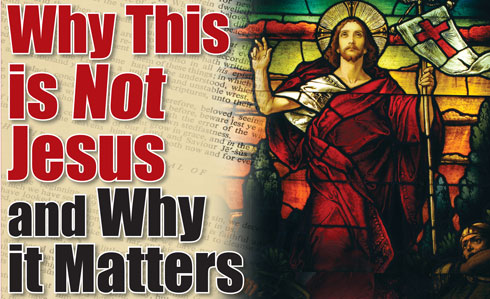





Comment