

 Tweet
Tweet
just saying....slander is ORALLY done...
-
-
These are the definitions in Canada:
What is defamation?
Defamation is communication about a person that tends to hurt the person's reputation. Defamation is a strict liability tort, which means that the intentions of the defamer are not relevant. The communication must be made to other people, not just to the person it's about. The statement must be false to be classified as defamation. If it is spoken, then defamation is termed “slander". If it is written, it is termed “libel”. It can also be a gesture, which is a type of slander.
The law protects your reputation against defamation. If someone defames you, you can sue them to pay money (called “damages”) for harming your reputation. You have to sue in Supreme Court, not Provincial Court, and you have to sue within 2 years of the defamation. It is not relevant the timing of when you discovered the defamation. Rather, the limitation period commences on the date the defamatory statement was made or published. For more on the court system, check script 432, called “Our Court System and Solving Disputes.”
The law doesn't protect you from a personal insult or a remark that injures only your pride; it protects reputation, not feelings. So if someone calls you a lazy slob, you might be hurt, but you probably don't have a good reason to sue. If he goes on to say you cheat in your business dealings, you probably do have a good reason to sue, as long as he says it to someone else, not just to you. If he says it only to you, you can't sue because he has not hurt your reputation.
Defamation can be a crime under the Criminal Code, but only rarely. This script is about civil, not criminal, defamation. If someone has defamed you, you may also be able to sue for a violation of your privacy under the provincial Privacy Act. Further, section 7 of the BC Human Rights Code prohibits another type of defamation, namely, a discriminatory publication. For more information on that, contact the BC Human Rights Tribunal at 604.775.2000 in Vancouver and 1.888.440.8844 elsewhere in BC. Or see its website at www.bchrt.bc.ca. Also, check script 236, called “Human Rights and Discrimination Protection.”
What is libel?
Libel is the type of defamation with a permanent record, like a newspaper, a letter, a website posting, an email, a picture, or a radio or TV broadcast. If you can prove that someone libeled you, and that person does not have a good defence (see the section on defences below), then a court will presume that you suffered damages and award you money to pay for your damaged reputation. But going to Supreme Court is expensive and even if you win, you may not get as much as it costs you to sue. In deciding on damages, the Court will consider your position in the community. For example, if you are a professional, damages may be higher.
What is slander?
Slander is the type of defamation with no permanent record. Normally it's a spoken statement. It can also be a hand gesture or something similar. The law treats slander differently than libel: with slander, you have to prove you suffered damages, in the form of financial loss, to get compensation. But with libel, the law presumes you suffered damages. For example, say that Bill told John you were a cheat, and then John refused to do business with you because of that. You sue Bill and prove that you lost business with John because of what Bill said. Bill would have to pay you for the loss of John's business, but not for the general damage to your reputation. It can be very hard to prove this sort of financial loss. That's why most slander cases never go to court. -
boof?If you don't fight for what you deserve, you deserve what you get.
We are > Fossil Fuels --- Bill McKibben 350.orgComment
-
-
I think this whole thing should wait till Monday, when clown sign in....then he can see the boof!Originally posted by kia027 View PostComment
-
-

yuh neva get boof yet?Comment
-
Originally posted by Tropicana View Post
no the word is boof. You are quite resourceful Tropi I am sure you will find the meaning If you don't fight for what you deserve, you deserve what you get.
We are > Fossil Fuels --- Bill McKibben 350.orgComment
-
fixed your questionOriginally posted by Emperah View PostIf you don't fight for what you deserve, you deserve what you get.
We are > Fossil Fuels --- Bill McKibben 350.orgComment
-
Now that I think about it it hard to explain.Originally posted by Tropicana View Post
Boof=trumped but with a little bit of a disgraced attached. Much like a sack in the NFL.Comment
-
-
Where are all of these new words coming from and how come I am the only ones who doesn't know them? Nobody I know uses some of the words I read on here.
Comment
-
Boof as in tump....but that was not the context here.Originally posted by Emperah View PostComment
-
-
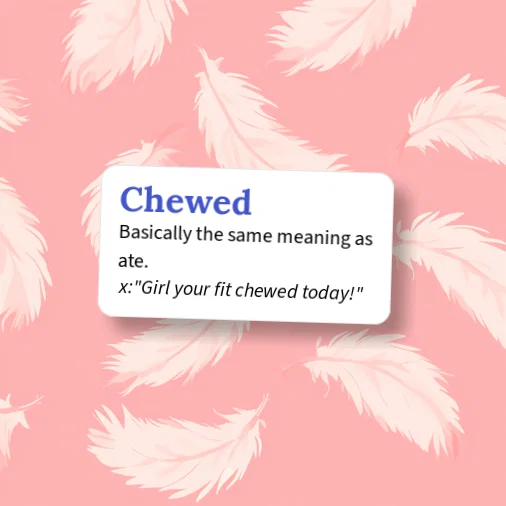
Oh no, mi not going back over to the Urban Dictionary. Every time onoo send me ovah deh soh mi ave fi run out quick-quick before min faint weh because what me read is:

Comment


Comment