

 Tweet
Tweet
I stumbled across this article so again I will throw this into the mix. Again, I have had not negative experiences w.r.t. race in the Middle East and on the surface, things appear to be more inclusive.
An article from Al Jazeera written by a Black woman says otherwise. What has been your experience in the Middle East?
An article from Al Jazeera written by a Black woman says otherwise. What has been your experience in the Middle East?
In response to an essay I wrote recently regarding the "essential blackness" of the Palestinian struggle, I received this reaction, among others: "What about Arab anti-black racism? Or the Arab slave trade?"The Arab slave trade is a fact of history and anti-black racism is a fact of current reality, a shameful thing that must be confronted in Arab societies. Though I claim no expertise on the subject, I think that applying notions of racism as it exists in the US will preclude a real understanding of the subject in the Arab world.
I spent much of much of my youth in the Arab world and I do not recall having a race consciousness until I came to the United States at the age of 13. My knowledge of Arab anti-black racism comes predominantly from Arab Americans. Like other immigrant communities, they adopt the prevailing racist sentiments of the power structure in the US, which decidedly holds African-Americans in contempt.
This attitude is also becoming more prevalent in Arab countries for various reasons, but mostly because Arab governments, particularly those that import foreign labour from Africa and Southeast Asia, have failed to implement or enforce anti-discrimination and anti-exploitation laws.
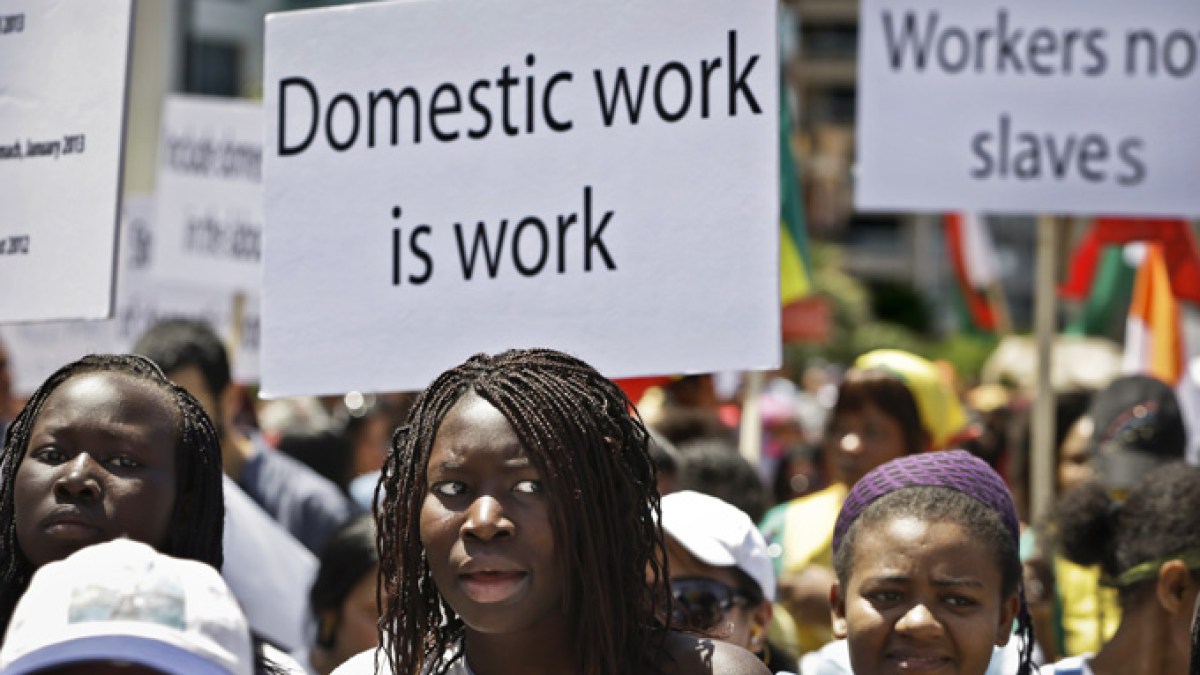
In many Arab nations, including Kuwait where I was born, workers are lured into menial jobs where their passports are confiscated upon arrival and they are forced into humiliating and often inhuman working conditions. They have little to no protection under the law and are particularly vulnerable to exploitation, including extraordinarily long working hours, withholding of salaries, sexual, mental, and physical abuse, and denial of travel.
The recent case of Alem Dechesa brought to light the horrors faced by migrant workers in Lebanon. Dechesa, a domestic worker from Ethiopia, committed suicide after suffering terrible mental and physical abuse at the hands of her Lebanese employers, whose savage beating of her in front of the Ethiopian Consulate went viral last year.
Defining beauty
An extension to Arab anti-black racism is an aspiration to all that our former - and current - colonisers possess. Individuals aspire to what is powerful and rich, and the images of that power and wealth have light skin, straight hair, small noses, ruddy cheeks and tall, skinny bodies. That image rejects melanin-rich skin, coiled hair, broad or pointy noses, short stature, broad hips and big legs. So we, too, reject these features, despising them in others and in ourselves as symbols of inferiority, laziness, and poverty. That's why the anglicising industries of skin bleaching and hair straightening are so profitable.
And yet, when Palestine went to the UN for recognition of statehood, the vast majority of nations who voted yes were southern nations. The same is true when Palestine asked for admission to UNESCO. In fact, when the US cut off funding to UNESCO in response to its members' democratic vote to admit Palestine, it was the African nation of Gabon that immediately stepped up with a $2m donation to UNESCO to help offset the loss of income.
It was not Saudi Arabia, or Kuwait, or Qatar, or Lebanon, or Sweden, or France. It was Gabon. How many Palestinians know that, much less expressed gratitude for it?
So concerned are Palestinians with what the European Union and the United States think of us. So engrossed are we in grovelling for their favour and handouts as they support a system of Jewish supremacy pushing our ancient society into extinction. We dance like clowns any time a European leader spares us a thought. Have we no sense of history? No sense of pride? No comprehension of who is truly standing with us and who is sabotaging us?
In a world order that peddles notions of entire continents or regions as irreducible monoliths, the conversation among Arabs becomes a dichotomous "Arab" versus "African", ignoring millennia of shared histories ranging from extensive trade and commerce, to the horrors of the Arab slave trade, to the solidarity of African-Arab anti-colonial unity, to the current state of ignorance that does not know history and cannot connect the dots when it comes to national liberation struggles.
Arab slave trade
When I was researching the subject of the Arab slave trade, I came upon a veritable treasure of a website established by The African Holocaust Society, or Mafaa [Swahili for "holocaust"], a non-profit organisation of scholars, artists, filmmakers, academics, and activists dedicated to reclaiming the narratives of African histories, cultures, and identities. Included in this great body of scholarly works is a comprehensive section on the Arab slave trade, as well as the Jewish slave trade, African-Arab relations over the centuries, and more, by Owen Alik Shahadah, an activist, scholar and filmmaker.
Reading this part of our shared history, we can see how a large proportion of Arabs, including those among us who harbour anti-black racism, are the sons and daughters of African women, who were kidnapped from Eastern African nations as sex slaves.
Unlike the European slave trade, the Arab slave trade was not an important feature of Arab economies and it predominantly targeted women, who became members of harems and whose children were full heirs to their father's names, legacies and fortunes, without regard to their physical features. The enslaved were not bought and sold as chattel the way we understand the slave trade here, but were captured in warfare, or kidnapped outright and hauled across the Sahara.
Race was not a defining line and enslaved peoples were not locked into a single fate, but had opportunity for upward mobility though various means, including bearing children or conversion to Islam. No-one knows the true numbers of how many African women were enslaved by Arabs, but one need only look at ourselves to see the shadows of these African mothers who gave birth to us and lost their African identities.
But while African scholars at the Mafaa Society make important distinctions between the Arab and European slave trades, enslavement of human beings is a horror of incomprehensible proportions by any standard, and that's what it was in the Arab world as it was - or is - anywhere. There are some who argue that the Arab slave traders were themselves indistinguishable from those whom they enslaved because the word "Arab" had cultural relevance, not racial.
I spent much of much of my youth in the Arab world and I do not recall having a race consciousness until I came to the United States at the age of 13. My knowledge of Arab anti-black racism comes predominantly from Arab Americans. Like other immigrant communities, they adopt the prevailing racist sentiments of the power structure in the US, which decidedly holds African-Americans in contempt.
This attitude is also becoming more prevalent in Arab countries for various reasons, but mostly because Arab governments, particularly those that import foreign labour from Africa and Southeast Asia, have failed to implement or enforce anti-discrimination and anti-exploitation laws.
In many Arab nations, including Kuwait where I was born, workers are lured into menial jobs where their passports are confiscated upon arrival and they are forced into humiliating and often inhuman working conditions. They have little to no protection under the law and are particularly vulnerable to exploitation, including extraordinarily long working hours, withholding of salaries, sexual, mental, and physical abuse, and denial of travel.
The recent case of Alem Dechesa brought to light the horrors faced by migrant workers in Lebanon. Dechesa, a domestic worker from Ethiopia, committed suicide after suffering terrible mental and physical abuse at the hands of her Lebanese employers, whose savage beating of her in front of the Ethiopian Consulate went viral last year.
Defining beauty
An extension to Arab anti-black racism is an aspiration to all that our former - and current - colonisers possess. Individuals aspire to what is powerful and rich, and the images of that power and wealth have light skin, straight hair, small noses, ruddy cheeks and tall, skinny bodies. That image rejects melanin-rich skin, coiled hair, broad or pointy noses, short stature, broad hips and big legs. So we, too, reject these features, despising them in others and in ourselves as symbols of inferiority, laziness, and poverty. That's why the anglicising industries of skin bleaching and hair straightening are so profitable.
And yet, when Palestine went to the UN for recognition of statehood, the vast majority of nations who voted yes were southern nations. The same is true when Palestine asked for admission to UNESCO. In fact, when the US cut off funding to UNESCO in response to its members' democratic vote to admit Palestine, it was the African nation of Gabon that immediately stepped up with a $2m donation to UNESCO to help offset the loss of income.
It was not Saudi Arabia, or Kuwait, or Qatar, or Lebanon, or Sweden, or France. It was Gabon. How many Palestinians know that, much less expressed gratitude for it?
So concerned are Palestinians with what the European Union and the United States think of us. So engrossed are we in grovelling for their favour and handouts as they support a system of Jewish supremacy pushing our ancient society into extinction. We dance like clowns any time a European leader spares us a thought. Have we no sense of history? No sense of pride? No comprehension of who is truly standing with us and who is sabotaging us?
In a world order that peddles notions of entire continents or regions as irreducible monoliths, the conversation among Arabs becomes a dichotomous "Arab" versus "African", ignoring millennia of shared histories ranging from extensive trade and commerce, to the horrors of the Arab slave trade, to the solidarity of African-Arab anti-colonial unity, to the current state of ignorance that does not know history and cannot connect the dots when it comes to national liberation struggles.
Arab slave trade
When I was researching the subject of the Arab slave trade, I came upon a veritable treasure of a website established by The African Holocaust Society, or Mafaa [Swahili for "holocaust"], a non-profit organisation of scholars, artists, filmmakers, academics, and activists dedicated to reclaiming the narratives of African histories, cultures, and identities. Included in this great body of scholarly works is a comprehensive section on the Arab slave trade, as well as the Jewish slave trade, African-Arab relations over the centuries, and more, by Owen Alik Shahadah, an activist, scholar and filmmaker.
Reading this part of our shared history, we can see how a large proportion of Arabs, including those among us who harbour anti-black racism, are the sons and daughters of African women, who were kidnapped from Eastern African nations as sex slaves.
Unlike the European slave trade, the Arab slave trade was not an important feature of Arab economies and it predominantly targeted women, who became members of harems and whose children were full heirs to their father's names, legacies and fortunes, without regard to their physical features. The enslaved were not bought and sold as chattel the way we understand the slave trade here, but were captured in warfare, or kidnapped outright and hauled across the Sahara.
Race was not a defining line and enslaved peoples were not locked into a single fate, but had opportunity for upward mobility though various means, including bearing children or conversion to Islam. No-one knows the true numbers of how many African women were enslaved by Arabs, but one need only look at ourselves to see the shadows of these African mothers who gave birth to us and lost their African identities.
But while African scholars at the Mafaa Society make important distinctions between the Arab and European slave trades, enslavement of human beings is a horror of incomprehensible proportions by any standard, and that's what it was in the Arab world as it was - or is - anywhere. There are some who argue that the Arab slave traders were themselves indistinguishable from those whom they enslaved because the word "Arab" had cultural relevance, not racial.


Comment