

 Tweet
Tweet
Freddie Gray died from a ‘tragic injury to his spinal cord,’ Baltimore police say
Baltimore Police say they will conduct a transparent and open investigation into the death of Freddie Gray, 25, who died in a hospital on April 19 after being reportedly injured following his arrest by police. (Reuters)
Freddie Gray, who died on Sunday, a week after he was seriously injured following his arrest, suffered “a very tragic injury to his spinal cord, which resulted in his death,” Baltimore Deputy Police Commissioner Jerry Rodriguez said at a Monday press conference, citing the preliminary results of an autopsy. “What we don’t know, and what we need to get to, is how that injury occurred,” Rodriguez said.
Gray’s death prompted authorities to launch a criminal investigation as protesters continued searching for answers.
A court summons gave the first glimpse into Gray’s arrest, a case that has ignited outrage over the past week. According to the document, obtained Monday morning by The Baltimore Sun, authorities say Gray “fled unprovoked upon noticing police presence,” and that officers later found the knife in his right pants pocket. The document reports that Gray “was arrested without force or incident” on April 12.
The charging document, filed in Baltimore District Court, says that Gray “suffered a medical emergency” during transport to the Western District station. He was, the document says, “immediately transported to Shock Trauma.”
[Thousands of police shootings since 2005 result in few prosecutions]
The Sun’s report was published as protesters demanded answers: Why was Gray arrested, and what happened to him in police custody that could have led to his death?
“I hear the concern, I hear the outrage,” Baltimore Police Commissioner Anthony W. Batts said at a news conference Monday afternoon. “I also hear the fear.”
Batts, who apologized to Gray’s family, promised that his department’s investigation would be completed by May 1.
Part of the frustration has come from the department’s initial silence.
“I understand it, because I’m frustrated,” Baltimore Mayor Stephanie Rawlings-Blake said at the Monday news conference. She promised: “We will provide the community with all of the answers that the community deserves.”
Rodriguez said he was “proud” that Baltimore residents “speak up,” adding, “this is not Ferguson.”
Even to say they are skeptical of it or scrutinizing it
— Justin Fenton (@justin_fenton) April 20, 2015
On Saturday and Sunday, protesters gathered outside the Western District station where Gray was initially taken before he was transported to the University of Maryland R Adams Cowley Shock Trauma Center in Baltimore. Gray died at the hospital Sunday morning following reports that “his spine was 80 percent severed at his neck,” his family attorney Billy Murphy said in a statement to The Sun.
Family releases a photo of #FreddieGray, who died Sunday, a week after his arrest. http://t.co/uyzuVYarVD pic.twitter.com/cdEVSBkWzc
— Sean Welsh (@SeanJWelsh) April 20, 2015
The incident unfolded about 8:30 a.m. April 12, when three Baltimore police officers approached Gray, and he ran away, according to the Baltimore Police’s timeline of events, given to the media on Monday afternoon. Officers caught him about two blocks from the scene.
Deputy Commissioner Jerry Rodriguez said the officers suspected Gray was “immediately involved or had been recently involved in criminal activity.” He had been convicted on drug charges in the past and was due in court next month on a drug charge from arrest last year, the Associated Press reported.
Once caught, Gray “gave up without the use of force,” Rodriguez said.
“They had him in a crab-like position, where his legs were bent back and his arms,” an unnamed witness told WBAL-TV. “He was handcuffed, and at that point, they had knees in his back and his head.”
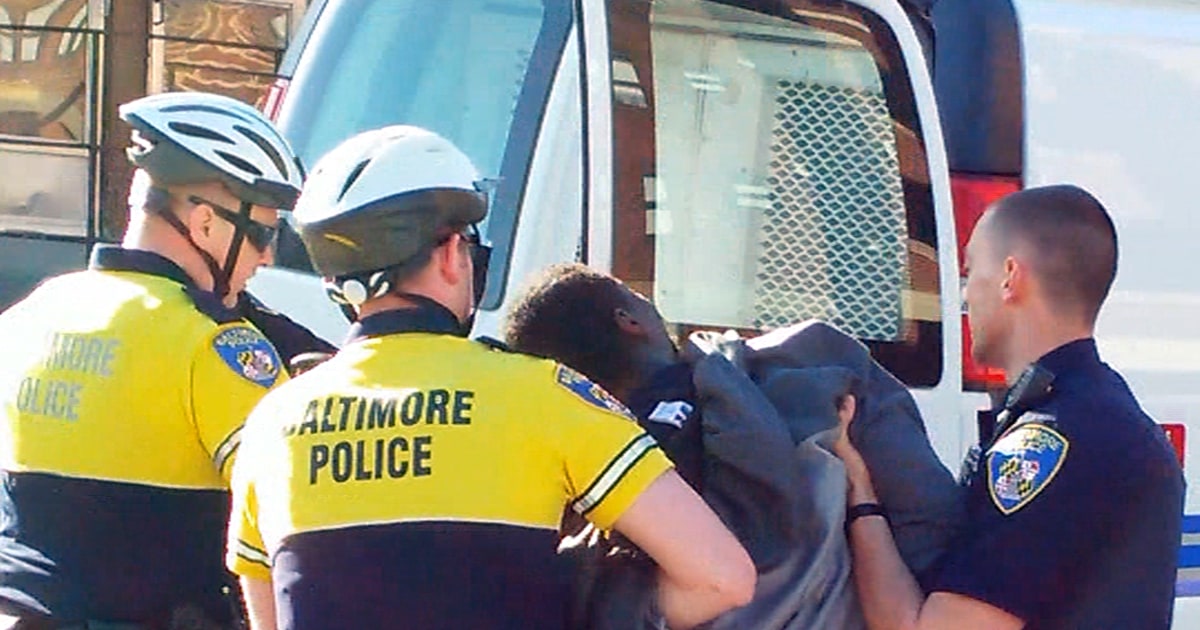
A video shot by a bystander shows officers dragging him and loading him face down into a police van.
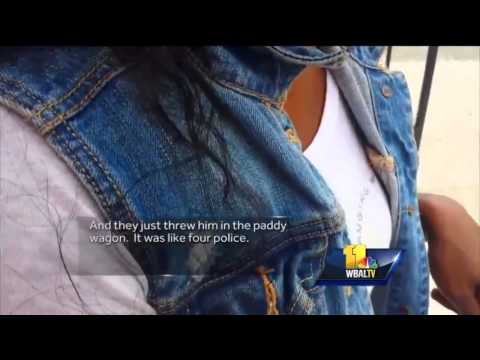
“They threw him in the paddy wagon first, you know, face down, and mind you, his arms and legs are locked up,” another unnamed witness told WBAL. “He was face down as he was on his stomach. They just threw him in the paddy wagon face down, head first, ankles bound, arms bound.”
On the way to the station, police stopped the van to put more restraints on him, according to the department timeline. “Video evidence indicates the suspect is conscious and speaking at this time,” police said.
About a half-hour after police got Gray to the station, officers called for paramedics, police said.
In charging documents obtained by The Sun, Baltimore police officer Garrett Miller wrote that Gray was stopped because he “fled unprovoked upon noticing police presence.” After officers apprehended him, they found a switchblade clipped inside his pants pocket and arrested him.
“The defendant was arrested without force or incident,” Miller wrote. “During transport to Western District via wagon transport the defendant suffered a medical emergency and was immediately transported to Shock Trauma via medic.”
The report contradicts the statement from Murphy, the family attorney, who said Sunday that Gray “screamed in pain” during the arrest and was in police custody for at least an hour before medics were called.
“He lapsed into a coma, died, was resuscitated, stayed in a coma and on Monday, underwent extensive surgery at Shock Trauma to save his life,” Murphy said in the statement. “He clung to life for seven days.”
[The heartbreak of a mother who saw her son die during a televised high-speed chase]
Rawlings-Blake said she will ensure “the right people are held accountable.”
“How was Mr. Gray injured? Were our proper protocols and procedures actually followed? What are the next steps?” Rawlings-Blake told reporters on Sunday, according to NBC News. “We’re still collecting details surrounding the incident, but I want our residents to know that we will get the answers.”
The four officers have been put on administrative leave. Authorities are putting together a task force to investigate the incident, and an independent review board will look into the administrative case. “It’s a two-part investigation. One is a criminal case, for Mr. Gray and also for the officers,” Rodriguez said. “We always have that component in there to determine whether there is criminal culpability.”
Murphy said he will be conducting his own investigation, talking to bystanders who saw the incident.
“He’s gone,” Gray’s stepfather, Richard Shipley, told the Sun. “What else is there to say?”
[Peter Hermann and Lynh Bui contributed to this report, which has been updated
Baltimore Police say they will conduct a transparent and open investigation into the death of Freddie Gray, 25, who died in a hospital on April 19 after being reportedly injured following his arrest by police. (Reuters)
Freddie Gray, who died on Sunday, a week after he was seriously injured following his arrest, suffered “a very tragic injury to his spinal cord, which resulted in his death,” Baltimore Deputy Police Commissioner Jerry Rodriguez said at a Monday press conference, citing the preliminary results of an autopsy. “What we don’t know, and what we need to get to, is how that injury occurred,” Rodriguez said.
Gray’s death prompted authorities to launch a criminal investigation as protesters continued searching for answers.
A court summons gave the first glimpse into Gray’s arrest, a case that has ignited outrage over the past week. According to the document, obtained Monday morning by The Baltimore Sun, authorities say Gray “fled unprovoked upon noticing police presence,” and that officers later found the knife in his right pants pocket. The document reports that Gray “was arrested without force or incident” on April 12.
The charging document, filed in Baltimore District Court, says that Gray “suffered a medical emergency” during transport to the Western District station. He was, the document says, “immediately transported to Shock Trauma.”
[Thousands of police shootings since 2005 result in few prosecutions]
The Sun’s report was published as protesters demanded answers: Why was Gray arrested, and what happened to him in police custody that could have led to his death?
“I hear the concern, I hear the outrage,” Baltimore Police Commissioner Anthony W. Batts said at a news conference Monday afternoon. “I also hear the fear.”
Batts, who apologized to Gray’s family, promised that his department’s investigation would be completed by May 1.
Part of the frustration has come from the department’s initial silence.
“I understand it, because I’m frustrated,” Baltimore Mayor Stephanie Rawlings-Blake said at the Monday news conference. She promised: “We will provide the community with all of the answers that the community deserves.”
Rodriguez said he was “proud” that Baltimore residents “speak up,” adding, “this is not Ferguson.”
Even to say they are skeptical of it or scrutinizing it
— Justin Fenton (@justin_fenton) April 20, 2015
On Saturday and Sunday, protesters gathered outside the Western District station where Gray was initially taken before he was transported to the University of Maryland R Adams Cowley Shock Trauma Center in Baltimore. Gray died at the hospital Sunday morning following reports that “his spine was 80 percent severed at his neck,” his family attorney Billy Murphy said in a statement to The Sun.
Family releases a photo of #FreddieGray, who died Sunday, a week after his arrest. http://t.co/uyzuVYarVD pic.twitter.com/cdEVSBkWzc
— Sean Welsh (@SeanJWelsh) April 20, 2015
The incident unfolded about 8:30 a.m. April 12, when three Baltimore police officers approached Gray, and he ran away, according to the Baltimore Police’s timeline of events, given to the media on Monday afternoon. Officers caught him about two blocks from the scene.
Deputy Commissioner Jerry Rodriguez said the officers suspected Gray was “immediately involved or had been recently involved in criminal activity.” He had been convicted on drug charges in the past and was due in court next month on a drug charge from arrest last year, the Associated Press reported.
Once caught, Gray “gave up without the use of force,” Rodriguez said.
“They had him in a crab-like position, where his legs were bent back and his arms,” an unnamed witness told WBAL-TV. “He was handcuffed, and at that point, they had knees in his back and his head.”
A video shot by a bystander shows officers dragging him and loading him face down into a police van.
“They threw him in the paddy wagon first, you know, face down, and mind you, his arms and legs are locked up,” another unnamed witness told WBAL. “He was face down as he was on his stomach. They just threw him in the paddy wagon face down, head first, ankles bound, arms bound.”
On the way to the station, police stopped the van to put more restraints on him, according to the department timeline. “Video evidence indicates the suspect is conscious and speaking at this time,” police said.
About a half-hour after police got Gray to the station, officers called for paramedics, police said.
In charging documents obtained by The Sun, Baltimore police officer Garrett Miller wrote that Gray was stopped because he “fled unprovoked upon noticing police presence.” After officers apprehended him, they found a switchblade clipped inside his pants pocket and arrested him.
“The defendant was arrested without force or incident,” Miller wrote. “During transport to Western District via wagon transport the defendant suffered a medical emergency and was immediately transported to Shock Trauma via medic.”
The report contradicts the statement from Murphy, the family attorney, who said Sunday that Gray “screamed in pain” during the arrest and was in police custody for at least an hour before medics were called.
“He lapsed into a coma, died, was resuscitated, stayed in a coma and on Monday, underwent extensive surgery at Shock Trauma to save his life,” Murphy said in the statement. “He clung to life for seven days.”
[The heartbreak of a mother who saw her son die during a televised high-speed chase]
Rawlings-Blake said she will ensure “the right people are held accountable.”
“How was Mr. Gray injured? Were our proper protocols and procedures actually followed? What are the next steps?” Rawlings-Blake told reporters on Sunday, according to NBC News. “We’re still collecting details surrounding the incident, but I want our residents to know that we will get the answers.”
The four officers have been put on administrative leave. Authorities are putting together a task force to investigate the incident, and an independent review board will look into the administrative case. “It’s a two-part investigation. One is a criminal case, for Mr. Gray and also for the officers,” Rodriguez said. “We always have that component in there to determine whether there is criminal culpability.”
Murphy said he will be conducting his own investigation, talking to bystanders who saw the incident.
“He’s gone,” Gray’s stepfather, Richard Shipley, told the Sun. “What else is there to say?”
[Peter Hermann and Lynh Bui contributed to this report, which has been updated












Comment